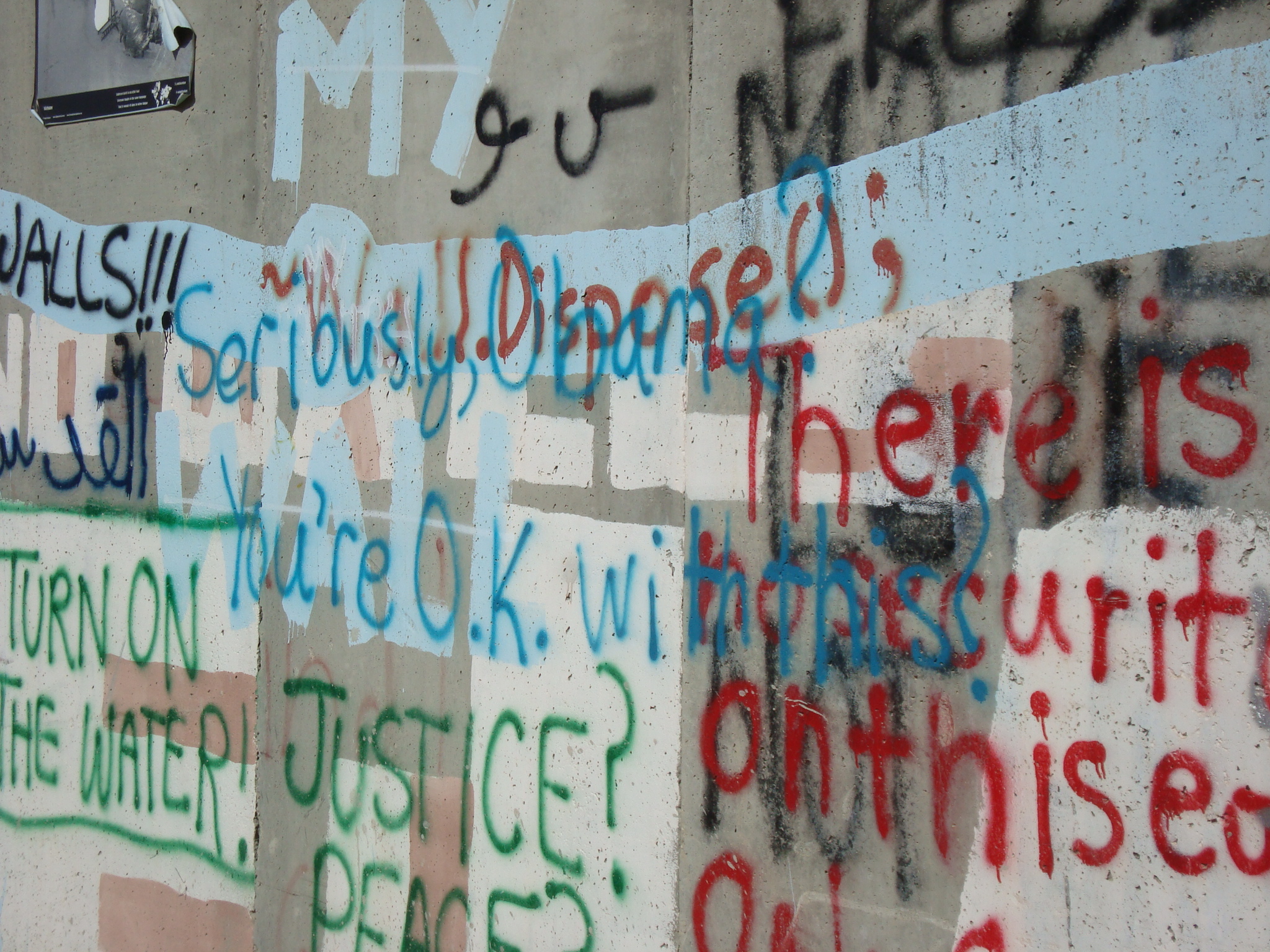
We say: Peace… on International Women’s Day.

water cannons, flash grenades, and tear gas from Israeli government forces… On 8 March 2012, these items greeted women who walked for peace… Click here to watch the video.

These are the women who stand for peace and who live with the ugliness of Qalandiya Checkpoint that prevents free movement between Ramallah, the village of Qalandiya, and East Jerusalem. I remember this ugliness from my time there on early mornings between Dec. 2010 and March 2011.

As we enter this new year (from one International Women’s Day to the next), we can draw on the traditional movement song, “We shall not be moved”. Just like this poppy of resistance that appears in spring in the hills around Jerusalem.

We shall be moved by flowers growing - Nabi Samuel - 1 March 2011 - Photo: Sherry Ann

"We shall be moved by flowers growing." - Nabi Samuel - 1 March 2011 - Photo: Sherry Ann (Quoting "We Shall Be Moved", Carolyn McDade, 2002)

And, I’d like to invite us…to be moved. We, we shall be moved…in love….

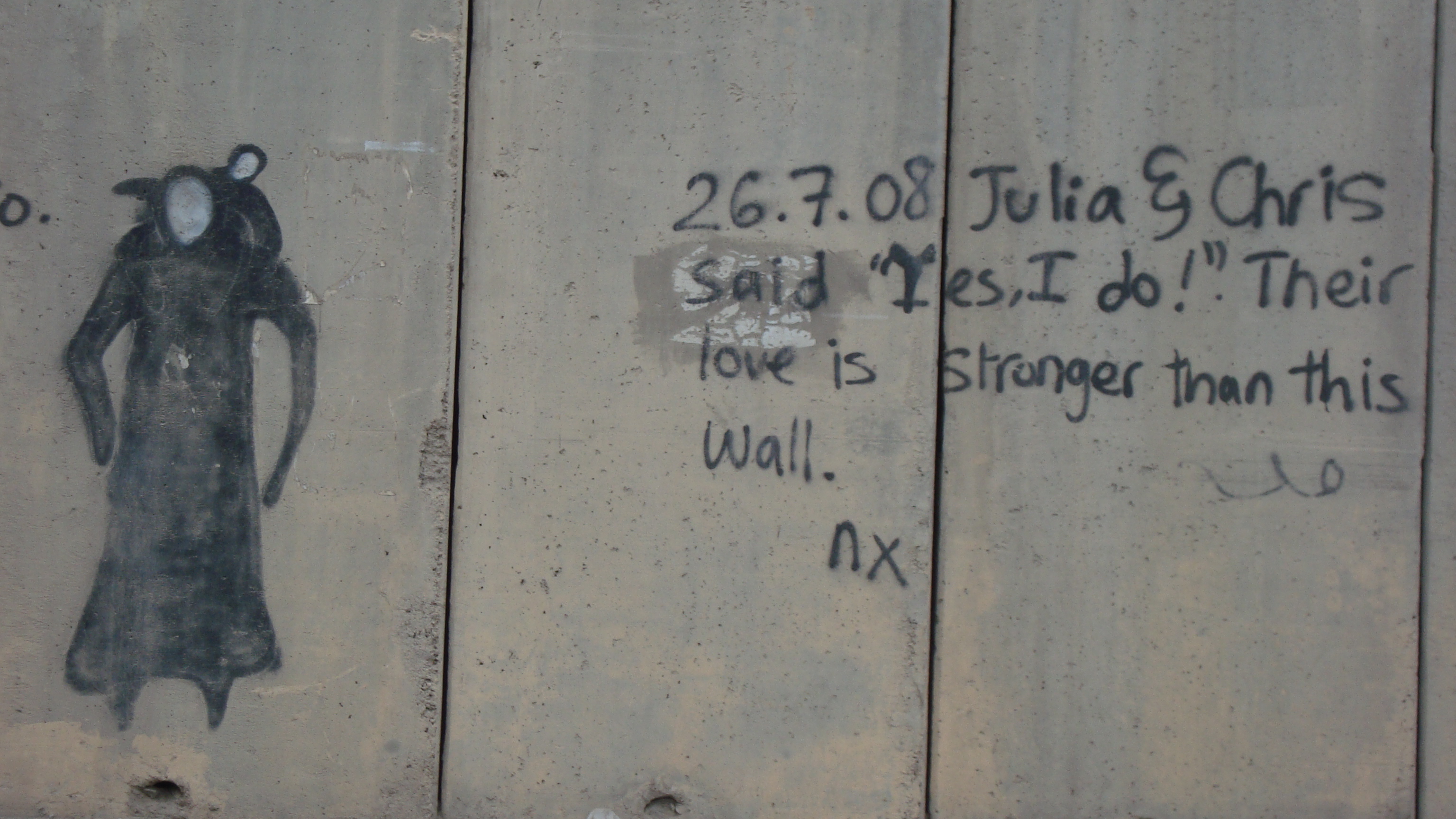
"Love is stronger than this wall." - Ar Ram, West-Bank side of Separation Wall, near Qalandiya Checkpoint - 6 Jan. 2011 - Photo: Sherry Ann

"Love is stronger than this wall." - Ar Ram, West-Bank side of Separation Wall, near Qalandiya Checkpoint - 6 Jan. 2011 - Photo: Sherry Ann

Choose a way…local, nearby, or afar…

For example, learn and participate:

1) The REDress Project –  “The REDress Project, focuses around the issue of missing or murdered Aboriginal women across Canada. It is an installation art project based on an aesthetic response to this critical national issue.” Click here and here (for Edmonton’s connection).

2) Subject: [womeninblack] Call For Action – Hana Shalabi and other female prisoners

“Dear all, The following is a letter to be sent to the israeli authority in order to make some pressure to releas Hana Shalabi and the other palestinian women detainees of freedom. You can either copy the letter or create your own letter and send it to the provided addresses, you also can send a letter to Hana and the other women detainees by contacting Addameer.  if you are not able to see the text bellow please follow this link: http://addameer.org/etemplate.php?id=450    ”


The Disappearing of Anata – home by home…

Anata is a Palestinian community located next door to Israeli-occupied East Jerusalem. Anata is in the occupied West Bank, more specifically in Area C (click here), an area that is under Israeli control. According to the Oslo Agreement of the 1990s, the Israeli government has planning, building, and military control. I visited Anata briefly last February on my way from Qalandiya Checkpoint to Shu’afat refugee camp.

Click here for a 2007 article about Anata. Click here for a statement from 27 Jan. 2012 by Maxwell Gaylard, the United Nations Humanitarian Coordinator for the occupied Palestinian territories (oPt). He had just visited Anata and called for an end to home demolitions in the West Bank.

In 2007, Anata no longer appeared on official Israeli road signs. Apparently, the Israeli government would prefer to wipe the name, Anata, from travellers’ minds.

And so the disappearing trick goes…This news just in from the EAPPI office in Jerusalem. “Anata: The Israeli military demolished Beit Arabiya – ICAHD Peace Centre on Monday night, January 23rd for the fifth time, along with the Abu Omar home rebuilt by ICAHD [Israeli Committee Against House Demolitions – click here]  in the summer of 2011, and structures in the East Anata Arab Al-Jahalin Bedouin compound. A total of seven homes were demolished, with 52 people including 29 children displaced. Click here for more information and to donate to the rebuilding of these homes.”

Which way to Anata? 17 Dec. 2010 - Photo: Sherry Ann

Economic measures – It’s time…

It’s time…to stand up…to begin to step as ‘we’.

One way that we can step, as a world community, toward ending the Israeli government’s illegal occupation of Palestine is to consider certain economic measures. Click here for a video with voices of Israeli citizens who support divestment from “companies that profit from Israel’s military occupation”.

Click below for information from:

-Palestinian Christians (Kairos Palestine)

-The United Church of Canada (What we can do)

-The Methodist Church, United Kingdom (Justice for Palestine and Israel)

-The World Council of Churches (For peace)

Looking to the sunrise.Zaytoun Checkpoint at our backs: Entry to East Jerusalem_18Feb2011 Photo: Sherry Ann

Persisting…for a just peace…

Almost a year has passed since I posted a report about demolition devastation for the community of Dkaika in the occupied West Bank. The report was prepared by my Ecumenical Accompanier (EA) team mates in Hebron, 12 Jan. 2011. Click here.

This week, Jan McIntyre, a Canadian EA who spent the autumn in the South Hebron EAPPI placement, posted this report (click here) about the same community. Virtually the entire village is under demolition order. Through EAPPI efforts, a media visit to the community occurred on Mon., 19 Dec. 2011.  To see a television report and one of the publications arising from this visit, click here. Please forward this information to those in your circles…to raise awareness…

As we gather in our homes during this season of dark and light, consider the dance of candle flame…like persistence toward a just peace in Palestine and Israel…

Persisting with dark and light - Christmas Eve - Bethlehem - 24 Dec. 2010 - Photo: Sherry Ann

December demolitions…’tis the season

In just the past week in East Jerusalem and in parts of the West Bank:

20 structures – demolished

Bedouin community east of East Jerusalem - parts slated for forced self-demolition (13 Dec. 2011) - Space for an Israeli-settler highway - Photo: Sherry Ann - 17 Dec. 2010

at least 61 people – newly homeless.

In 2011:

199 homes – demolished

1,051 people – displaced

For example:

7 December 2011 – In a Bedouin community, Khan al-Ahmar Mihtawish, in Jerusalem Area C, the Israeli Civil Administration demolished two residential barracks, which had been rebuilt following the prior demolition in the community on 31 October 2011.

Two tents of the International Committee of the Red Cross (see ICRC’s mission here) and two water tanks provided in response to the previous demolition were confiscated.

Twelve people (including nine children) were displaced and some 21 others affected.

Bare feet in December - Bedouin children - Impacted by the Israeli government's occupation of Palestine - Photo: Sherry Ann - 17 Dec. 2010

Focused on which side?

Over the last year and a half, even as I was preparing to go to East Jerusalem, I have been asked, “Which side are you on?” A natural starting point for many of us, in trying to find our way into understanding the Israeli-Palestinian conflict, seems to be to ‘pick a side’. Why?

Contemplation - Old City - East Jerusalem - 20 Dec. 2010 - Sherry Ann


          As this internationally acknowledged military occupation of Palestine continues, I choose to stand with all those who are working toward a just peace. We are a diverse group, internationally, and include both Israelis and Palestinians who can see and feel the pain caused by the Israeli government’s occupation. I feel lucky to have had the opportunity to live in East Jerusalem, for “Reflection, with deep time spent in the consideration of others, opens the door to becoming a compassionate participant in the world” (Terry Tempest Williams, The Open Space of Democracy, 2004, p. 88).

Door Art - Tel Aviv - 29 Dec. 2010 - Sherry Ann


I continue to watch the news in East Jerusalem because I feel connected now. For example, see this recent story about two home demolitions. (Click here.)

Let’s move away from ‘either/or’ side-making. We are in ‘this’ together; people are hurting right now. Shall we focus on opening this door together?

Advent in Palestine and Israel

Almost one year ago, I boarded a plane on my way to Tel Aviv and then to occupied East Jerusalem. As a way to mark this passage of time, I’m posting a link to an article that I have written for The United Church Observer magazine. Click here.

What a year it has been…of reflection, conversation, and writing…I have been shaped by these experiences and am choosing to continue…to engage with peace (watch for a reflection on this topic at Southminster-Steinhauer United Church’s website. A podcast from 4 Dec. 2011 will appear in the coming weeks).

salaam, shalom, peace,

Sherry Ann

Tel Aviv beach

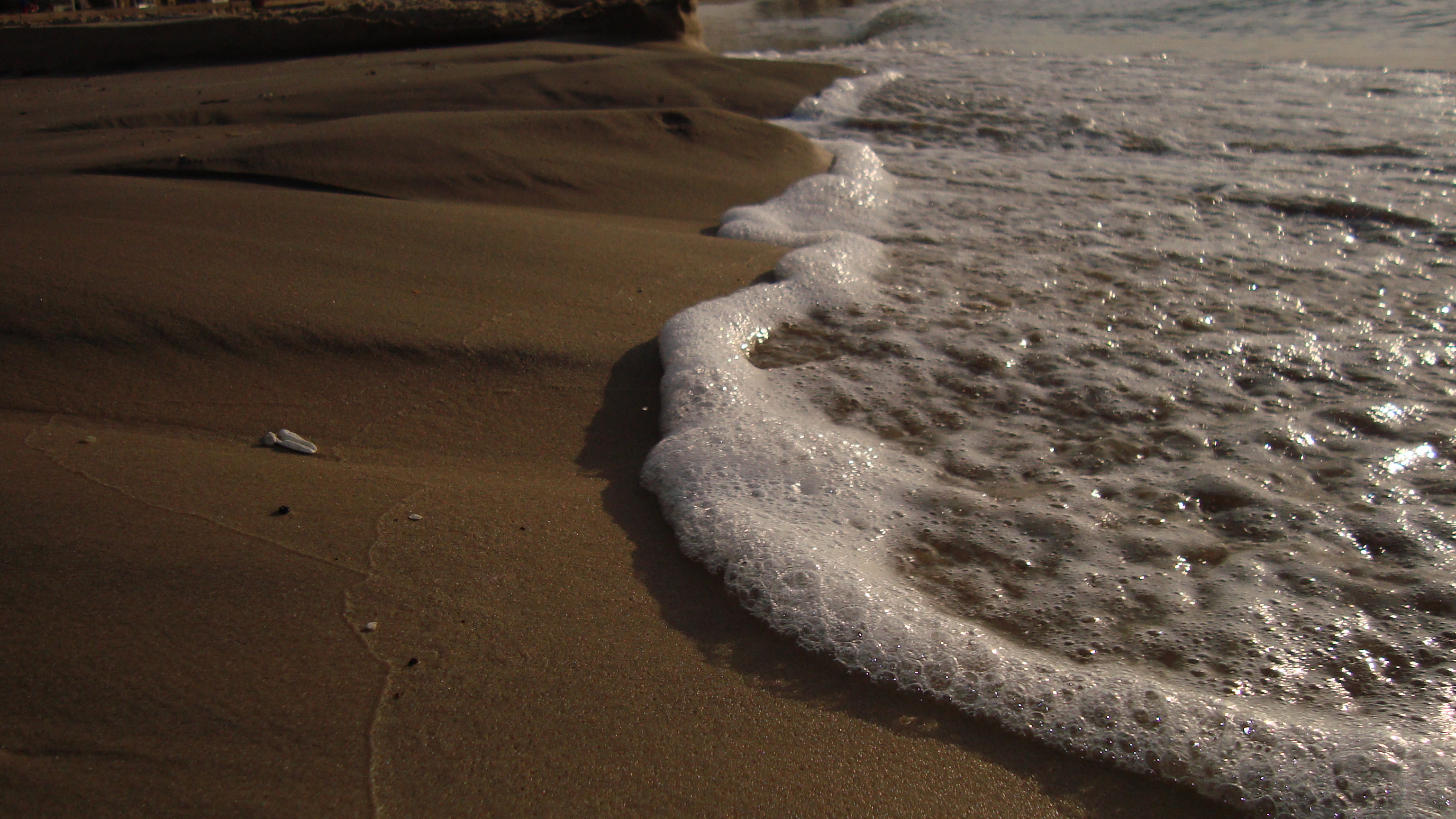
A bubbling of peace-Tel Aviv.Mediterranean Sea-30Dec2010_Sherry Ann

“If money were used for peace, things might be better.”

Eric Yellin, from Other Voice (click here), shared this thought with us, the Ecumenical Accompaniers of Group 38, on 26 January 2011. We were on a bus during our midterm orientation, touring the Israeli community of Sderot. From the outskirts of Sderot, you can see the Gaza Strip, one of the Palestinian territories controlled by Israel. Ronni Keidar, an Other-Voice member who lives in an Israeli community located immediately beside Gaza, also joined us on that sunny day in January.

Eric Yellin & Ronni Keidar, Other Voice – Gaza in the background – 26 Jan. 2011 – Photo: A. Farr

As Eric said, Sderot has become one of the most protected towns in the whole world with its shelters and shielded buildings. Constructing all of these ‘safe’ places is a very expensive venture. The bus stops are specially built to serve as shelters from rockets; steel shields are being built over school buildings; and safe rooms are being added to apartment buildings. 

School with a steel shield - Sderot - 26 Jan. 2011 - Photo: Sherry Ann


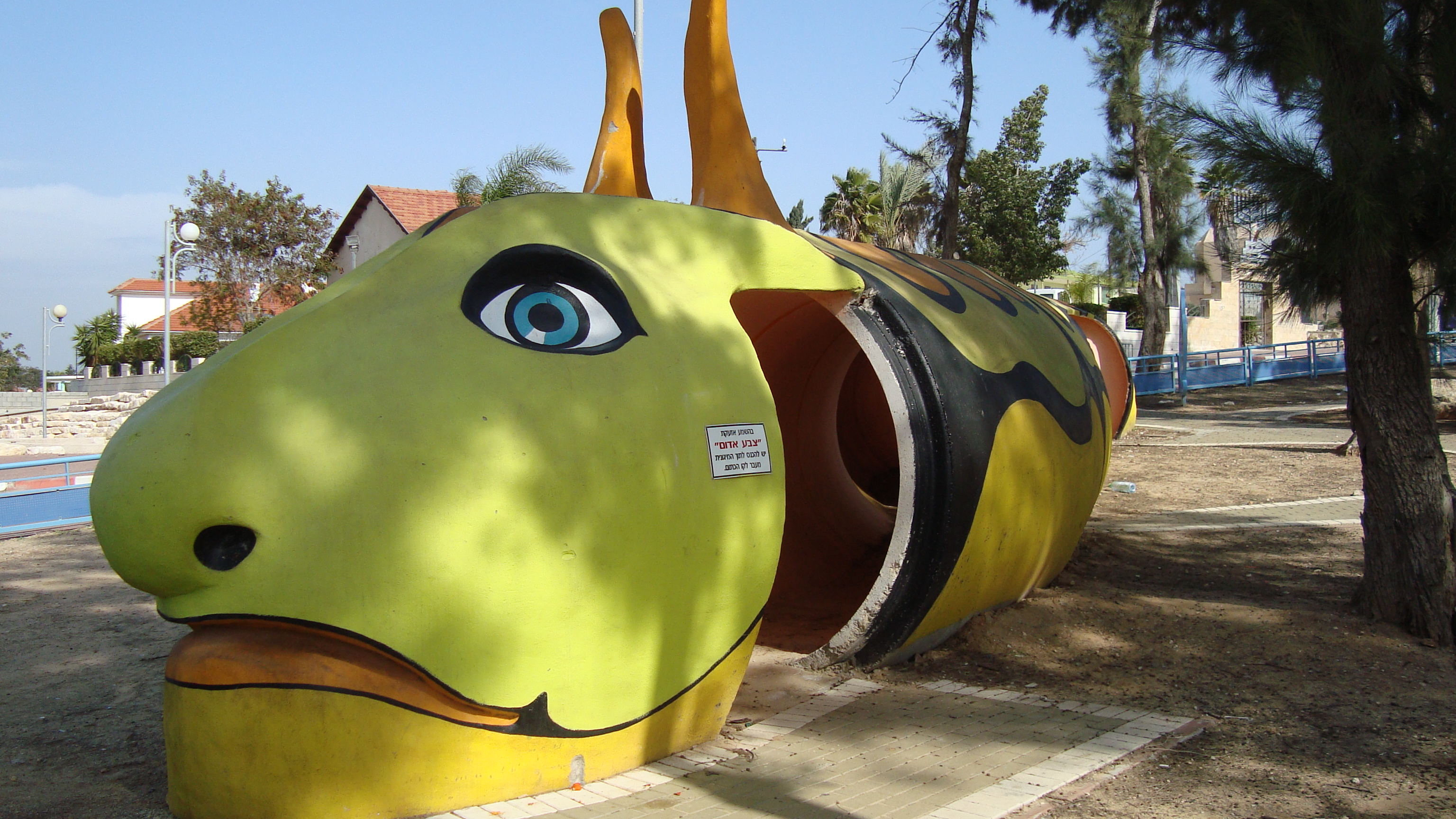
The sign on this playground rocket shelter (in the shape of a caterpillar) reads: “When you hear the ‘colour red’ go into the safe space beyond the orange line”.

Playground rocket shelter – Sderot – 26 Jan. 2011 – Photo: Sherry Ann


According to the Other-Voice website, this is a non-partisan, grassroots group seeking “a civil solution in the Sderot-Gaza region”. They have “no political aspirations. We are citizens of the Sderot region and the Gaza region. We are interested in finding creative ways of hearing a new voice from the region and for promoting hope and non-violent actions for the benefit of the locals who live here in Sderot and in the Gaza Strip” (Click here).

To me, Other-Voice members seem to be trying to maintain a human connection, regardless of the political ‘chess games’ being played in their midst. What if for a day or a week or two weeks, we, the people who live on this planet, agreed to sit down and talk with one another? Not as politicians, but as people. What if the ugly turnstiles in the Israeli Separation Wall/Barrier between Israel and the West Bank and the gates at the crossings between Israel and the Gaza Strip were suddenly swung open? What if the fishing boats of Gaza were free to come and go in the Mediterranean waters and ordinary citizens from across the water and around the globe were free to visit?

What if the money spent on the appearance of security were re-directed to supporting clean water, sanitation, and holistic diets…that would support child, youth, and lifelong health?

What if…?

If you are interested in the current efforts of global citizens, including Canadians, who are seeking to end the Israeli occupation of Palestine and who are standing for a just peace in the shape of Freedom Flotilla II – Stay Human, be sure to watch the following website over the next few days (click here) regarding the Canadian Boat to Gaza, The Tahrir (Arabic for “liberation”).

Some of you may have heard Michael Enright’s recent interview (19 June 2011) with Amira Hass on CBC Radio (clicke here). As described at that CBC Radio webpage, Amira Hass “is the only Jewish Israeli reporting from the occupied territories. She is a correspondent for the Israeli newspaper Haaretz.” Recall my recent postings about access to water – Amira Hass comments on this issue early in the CBC interview.

Amira Hass is one of the global citizens travelling on the Canadian Boat to Gaza, The Tahrir. For some of her recent postings from Greece, click here.

Recent articles by Amira Hass include:

1 July 2011 (just posted at Haaretz) – click here.  

28 June 2011 – click here

26 June 2011 – click here.

6 June 2011 – click here.  

Here is a link to another recent interview with Amira Hass (29 June 2011) – click here

For additional reading from various authors/sources, see:

UNRWA – click here.

Water and Sanitation crisis in Gaza – click here.

Canadian Boat to Gaza – article about – click here.

Irish Foreign Minister’s statement – click here.

Families Homeless due to Demolitions in the Jordan Valley

URGENT ACTION APPEAL from EAPPI:  

Home demolitions in the first six months of 2011 displaced 706 individuals, including 341 minors, the majority of whom reside in the Jordan Valley. (For example, click here.)

Usra Ahmed Hanani - Khirbet Tana, Jordan Valley - Feb. 2011 - Photo: P.Hanseid

The Palestinian population in the Jordan Valley has consistently faced discriminatory Israeli policies relating to planning, building, and access to land and water. Over 94 percent of building permit applications submitted by Palestinians to the Israeli authorities between 2000 and September 2007 were rejected. The Jordan Valley is classified by the Israeli government as part of Area C. Israel has both civil and security authority over Area C of the West Bank and the estimated 150,000 Palestinians living there.

Much of the Jordan Valley’s land has been declared a “closed military zone” by the Israeli army or has been illegally annexed into Israeli settlements, effectively turning the Jordan Valley into an Israeli enclave within the occupied Palestinian territory (oPt), and attempts by the authorities to remove the Palestinian population from Area C appear to be escalating.

Summary of Events (JUNE 2011):

  • On 21 June, the Israeli army destroyed 29 homes and other properties in the Bedouin hamlet of Hadidiya in the Jordan Valley, leaving 11 children and 16 adults without homes.
  • On 21 June, five structures (two homes, a shared kitchen and two animal shelters) were demolished in Khirbet Yarza, in the northern Jordan Valley, affecting 30 people, of which 8 are children.

o   For more information read this article or watch this video.

  • On 14 June 2001, demolitions were carried out in Al-Fasayal, in the southern Jordan Valley, which, according to Jordan Valley Solidarity, displaced an estimated 103 people, including 64 children.
  • Earlier this month, the Israeli army destroyed a tent and three animal shelters in Hadidiya, displacing a family of 10 on grounds that they had relocated their home one hundred meters from its original site to a closed military area.

International Law & Home Demolitions:

The International Court of Justice has stated that the Fourth Geneva Convention for the Protection of Civilian persons in Times of War applies to the oPt. The systematic policy of house demolitions carried out against Palestinian residents contravenes Article 53 of the Fourth Geneva Convention which forbids “any destruction by the Occupying Power of real or personal property belonging individually or collectively to private persons” except where such destruction is rendered “absolutely necessary by military operations”.

How to Make a Difference:

We encourage you to:

  • Share this information with your networks.
  • Inform your representative in parliament about what is happening in the Jordan Valley.
  • Contact the Israeli Ambassador in your country to condemn the acts above and to call for all demolition and eviction orders against Palestinians in the West Bank to be cancelled immediately.

Thirsting for Peace in Palestine and Israel – Water is a human right.

This posting is the third in a series regarding the water and sanitation crisis in the Israeli government’s occupation of the Palestinian territories, particularly East Jerusalem and the West Bank. For more information about this crisis, click here.  

From a distance in the West Bank and in East Jerusalem, distinguishing settlements and Palestinian communities is relatively easy, by the presence of black water tanks on Palestinian rooftops. Palestinians do not know for certain when the water will flow into their homes each week.
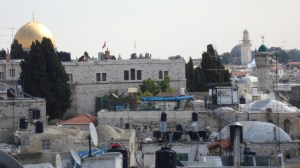
Old City - Palestinian water tanks are black. - East Jerusalem - 13 Feb. 2011 - Photo: Sherry Ann

In the West Bank, Palestinians may have the means to reach water in the ground but they are not allowed to do so. I’ve lost track of the number of news stories that I’ve read about water cisterns to collect rain water being destroyed by the Israeli army in the West Bank not necessarily new cisterns but also rock cisterns, thousands of years old. (For examples, click here and here.)
A Palestinian near Um Al Kher shows an EA damage to a water cistern near an Israeli military patrol road - 2010 - Photo: EAPPI

According to EWASH (Emergency Water and Sanitation Hygiene – Advocacy Task Force, in the occupied Palestinian territories – click here), “some [Palestinian] communities have to rely on water delivered by tanker, which costs as much as ten times the amount of water distributed via the water network, and is not always of acceptable quality. Some households are currently paying up to 40 per cent of their household income on clean water. Consequently, domestic consumption in such communities has fallen to as little as 20 litres per person per day, well below the 100 – 150 litres the World Health Organisation recommends to ensure all health concerns are met.” (EWASH fact sheet #2, p. 3)

Israeli authorities are requiring that if the West Bank Palestinians choose to build a water network, they must connect the Israeli settlements to that network. However, these settlements are illegal. This population transfer is a war crime according to Article 49(6) of the Fourth Geneva Convention (Click here and here). According to Article 43 of the Hague Convention, “Israel, as an occupying power over both the West Bank and the Gaza Strip, has the ultimate responsibility to as far as possible ensure that public order and safety are upheld in the territory it occupies, including securing the welfare of the population (article 43, Hague Convention)” (Diakonia, 30 Apr. 2011).

This environmental structural violence (Zaru, 2008) has not been making the news headlines. Yet, literally, Palestinian society has been thirsting for peace. Many Israelis may be unaware of this effect of their government’s policies. Israeli settlers travel on settler-only roads and other Israelis have the Separation Wall/Barrier blocking their view.

Water is a critical point of discussion in the Israeli-Palestinian conflict. Water is one of the “permanent status issues – borders, Jerusalem, settlements, refugees and water” (UN General Assembly media release, 12 Feb. 2010). 

Further, access to clean water and sanitation are now recognized as human rights (July 2010, the United Nations General Assembly vote. Click here.)

I write from a place, Alberta, Canada, that is just beginning to wake up to a water crisis. We, locally and globally, need to learn a new reality that water is a geo-political issue, a human-rights issue, an economic-justice issue, an issue tied to war and peace, and an issue related to respecting nature.
"Turn on the water!" - Separation Wall - Bethlehem - 13 Jan. 2011 - Photo: Sherry Ann

We all need water for physical reasons and spiritual reasons. This winter, at the height of evictions and demolitions of Palestinian homes by Israeli authorities in East Jerusalem, I was a tightly wound bundle of nerves. I had a very difficult time relaxing. But, I was the lucky one. On my three days off, I could ‘go to the water’, to Tel Aviv in Israel, to the Mediterranean Sea. I just went and sat on rocks by the water. I watched. I listened. I breathed. I took off my boots and I walked in the water.

Mediterranean Sea - Tel Aviv - Looking west toward Gaza - 30 Dec. 2010 - Photo: Sherry Ann

Not everyone who is a tightly wound bundle of nerves in Palestine can do that. For those who live in what has been called, the “largest open-air prison in the world”, Gaza, they may more easily ‘go to the water’. But that water is increasingly contaminated. (See EWASH factsheet #1 here).

We need to realize that the Israeli occupation of East Jerusalem, the West Bank, and Gaza is not only having a local impact. In terms of water, alone, this conflict is having international effects. Just think about how the water of the Mediterranean Sea is shared in that region of the world and flows into the Atlantic. Efforts to end the Israeli occupation of Palestine are particularly focused on the Mediterrean as I write given the efforts of the Freedom Flotilla II.  

Rev. Dr. Naim Ateek, the founder of Sabeel, the Ecumenical Liberation Theology Center in East Jerusalem, once said to an international conference in Washington, DC:

“Keep the energy; keep the fire burning. I hope some of you will get together and begin working on a strategy because many of us cannot listen anymore to analysis. We must move beyond that to effecting change. And I think we can do it.” (Click here.)

Reference:

Zaru, Jean. (2008). Occupied with Nonviolence: A Palestinian Woman Speaks. Foreword by Rosemary Radford Ruether. Minneapolis, MN: Fortress Press.

This posting, “Thirsting for Peace in Palestine and Israel – Water is a human right”, and the previous two postings on this blog are drawn from a spiritual gathering on 1 May 2011 at Southminster-Steinhauer United Church, Edmonton, Alberta, Canada. For an audio version of this series of postings, please click here.