Thirsting for Peace – Environmental Structural Violence – Water

This posting is the second in a series regarding the water and sanitation crisis in the Israeli government’s occupation of the Palestinian territories, particularly East Jerusalem and the West Bank. For more information about this crisis, click here.  

“Israeli troops kill Palestinian at West Bank checkpoint”

JERUSALEM | Sun Jan 2, 2011 1:24pm EST

JERUSALEM (Reuters) – “Israeli troops Sunday shot and killed a Palestinian who approached them at a West Bank checkpoint holding a glass bottle…” (for the full article, click here)
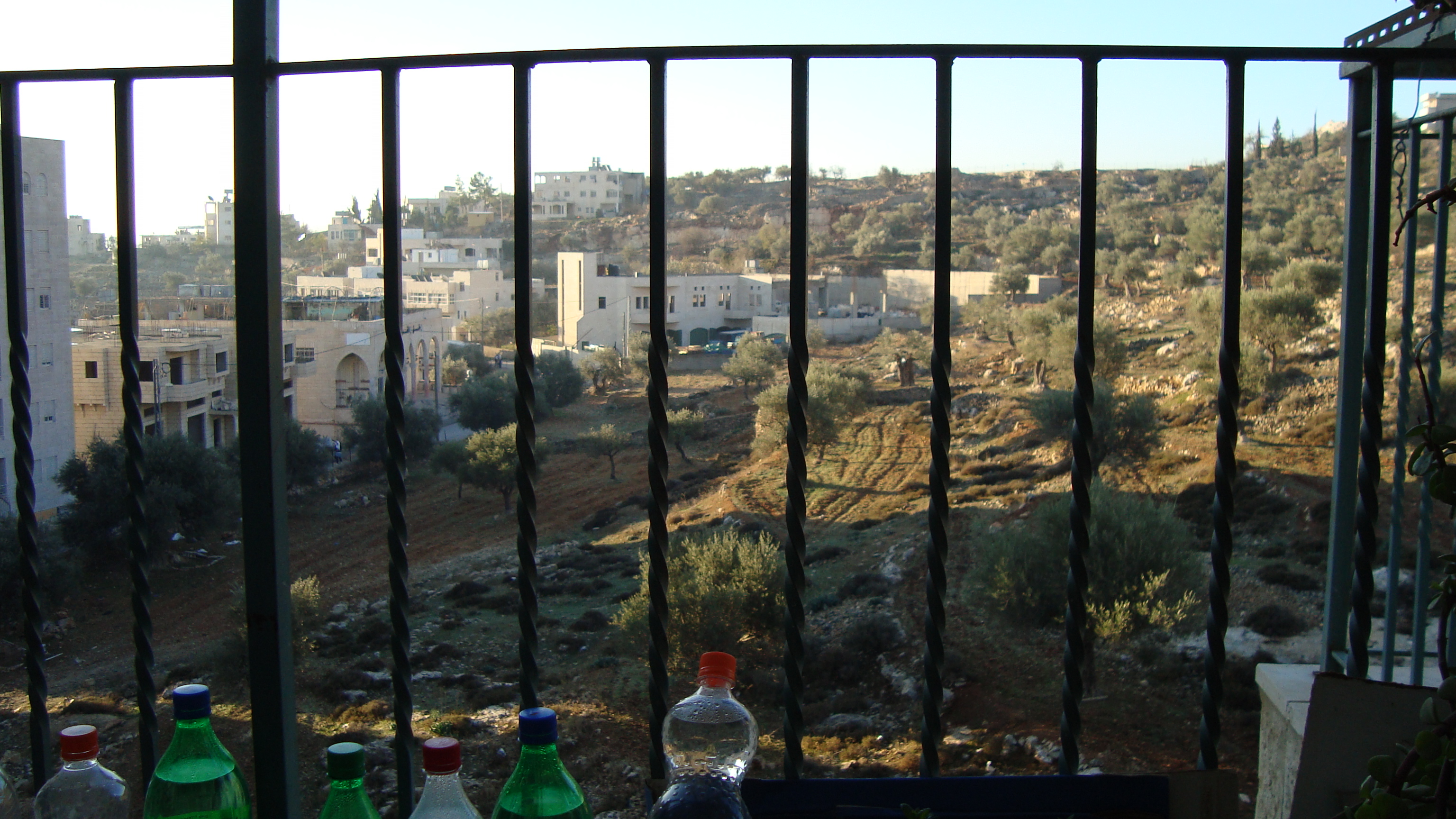
Morning view - Bethlehem - 12 Jan. 2011 - Photo: Sherry Ann

This is the kind of news headline that is familiar. This is “direct violence”. Yet, this news story from the 2 January 2011 has stuck with me because of the image of the young man carrying a bottle…what was in that bottle? Bottles are everywhere in East Jerusalem and the West Bank, particularly plastic bottles that have been thrown away. Recycling and garbage removal in East Jerusalem is a service only provided to some parts of that society. On the other hand, re-use in East Jerusalem and the West Bank is evident in containers of every size storing water… And here is the link to this image of the young man with the bottle…That bottle brings to mind another type of violence, “structural violence”.

Jean Zaru is the Presiding Clerk of the Friends Meeting House in Ramallah and a founding member of Sabeel, the Ecumenical Palestine Liberation Theology Center in Jerusalem. She writes that:

“Structural violence is silent. It does not show. Television captures the direct violence and most often the violence of the powerless and the hopeless, and it is headlined as terror. One basic weakness in most conceptualizations of violence in the Israeli-Palestinian conflict is the basic assumption of symmetry, which views contending parties in conflict as being equal.” But, as she observes, “the conflict is there because we are unequal. We are unequal in access to power, media, and influence. But we insist that we are not unequal in our rights.” (Zaru, 2008, p. 62)

Jean Zaru is calling out to the world, as are many other Palestinians and Israelis who are working toward ending the Israeli occupation of Palestine, with examples of this imbalance. One such example is the environmental structural violence around water.

Early in our orientation as the 25 Ecumenical Accompaniers of Group 38, we were introduced to George Rishmawi. He is Palestinian, the Advocacy Officer with the Near East Council of Churches, and a member of the EWASH – Emergency Water and Sanitation Hygiene – Advocacy Task Force (click here). EWASH has 31 international and local groups responding to the water and sanitation crisis in the occupied Palestinian territories. Rishmawi described to us that water is THE issue at the moment – it is a “tool of pressure” in the occupation, for as he said, being surrounded “by a wall, in a cage, without water, will kill a person”.

George Rishmawi - Jerusalem - 17 Dec. 2010 - Photo: Sherry Ann


In Palestine and Israel, there are four aquifers and they are being damaged:

“The coastal – down by Gaza. The northeastern, western and eastern are commonly referred to as the Mountain Aquifer. The main surface water resource is the Jordan river – starting in Lebanon – with rivers from Syria (Yarmouk) and Jordan (Zarqa) feeding into it. The Jordan River has been heavily abstracted upstream by Israel.”

4 Acquifers - EWASH - G.Rishmawi - 17 Dec. 2010

Rishmawi described to us that Lake Hula used to serve as a natural filter of these rivers into the Sea of Galilee (Tiberias Lake). But Lake Hula has shrunk considerably as a result of water-intensive agriculture and military (nuclear) purposes in Israel.
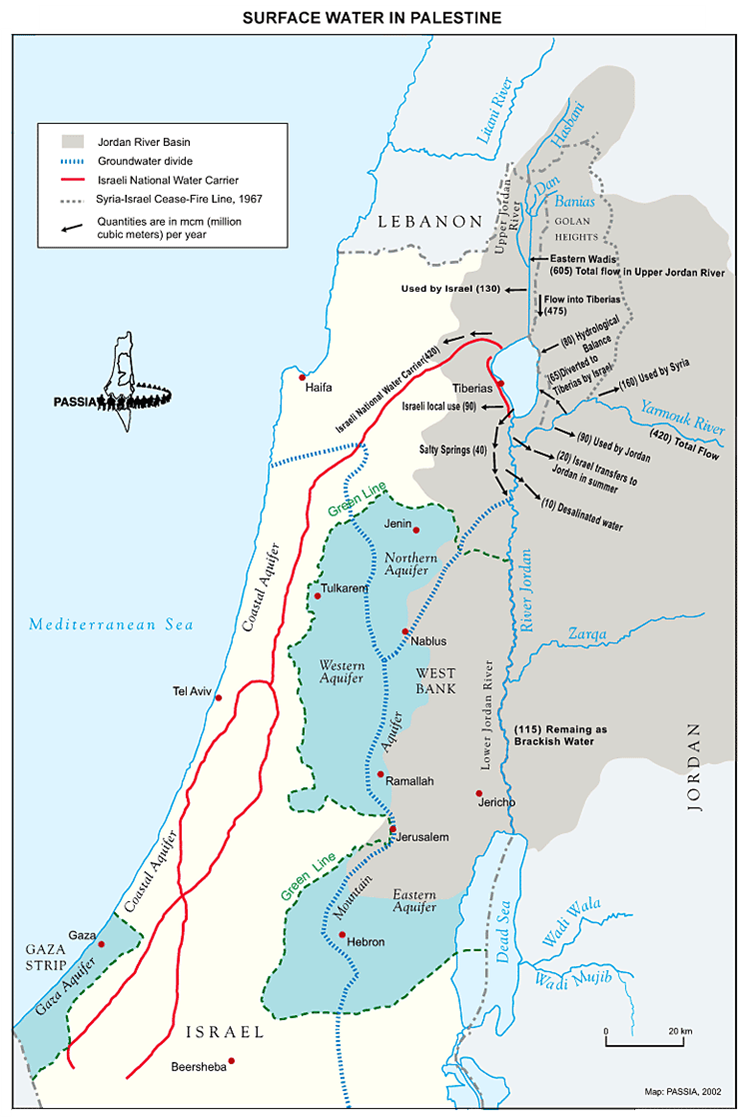
Surface Water - PASSIA - EWASH - GRishmawi - 17 Dec. 2010

On this next map, the red line outlines the National Water Carrier drawing water from the Jordan River into Israel. Before 1948, over one billion cubic metres of water flowed per year in the River Jordan. Post 1948, only 40 million cubic metres of water flow and it also carries sewage and discharge from fish farms. The Sea of Galilee is shrinking in size. The Dead Sea is also shrinking and, as a result, has split into a number of smaller lakes. In addition, surface evaporation is an issue for the Dead Sea: 25 mm/24 hrs (Shehadeh, 2008, p. 122).

According to George Rishmawi, in 1967 when Israel occupied East Jerusalem, the West Bank, and Gaza, “Israel secured control over all the ground water resources and issued military orders relating to water. For example: Military Order 98 (August 1967) transferred all authority over water resources to Israeli Military Command.” Permits were then required for developing water resources and infrastructure…including drilling wells and maintaining springs, cisterns, networks and reservoirs.

Further, “in 1982, then-Minister of Defence Ariel Sharon transferred all West Bank water supply systems to the Israeli national water company, Mekorot, for the symbolic price of one Israeli shekel.”

“As a result, Palestinians have been denied access to their rightful share of transboundary water resources and have been severely restricted in their ability to develop their water resources and water and sanitation infrastructure. The Wall, roadblocks, checkpoints and other Israeli ‘security measures’ further restrict Palestinian communities’ access to water resources and filling points.” (EWASH fact sheet #2, p. 1)

The Sea by Hikmat Hamdan (2010)

“I see a beautiful view when I wake up in the early morning. When the sun rises, from my roof I see the Dead sea, gleaming in the dawn. And when the sun rises opposite the settlement of Maale Adumim – an Israeli settlement – I see it like a crocodile.

And as I watch the sun rise, I say that maybe there will be a promise of a better tomorrow, and when I see the Wall, winding around us, I feel an acute pain, and I liken our life to a wrapped-around tin of sardines, and I think of the future of the young people. Will they find a tomorrow without tragedy and pain and siege, and will they be depressed?

And this is the tragedy of the Palestinian people. Although I live in a place with a stunning view, the Wall spoils its beauty.

Can you see how this is painful?

Can you see the pain that the Palestinian people live in?

What tomorrow will our children find?”

-Hikmat Hamdan

This posting, “Thirsting for Peace – Environmental Structural Violence – Water”, and the previous and the next postings on this blog are drawn from a spiritual gathering on 1 May 2011 at Southminster-Steinhauer United Church, Edmonton, Alberta, Canada. For an audio version of this series of postings, please click here.

References

Hamdan, Hikmat. (2010). “The Sea”. In Camden Abu Dis Friendship Association, Stories from our Mothers (meetings of British and Palestinian women). Edited by Nandita Dowson and Abdul Wahab Sabbah. Milton Keynes, UK: Lightning Source, p. 89.

Shehadeh, Raja. (2008). Palestinian Walks: Notes on a Vanishing Landscape. London: Profile Books.

Zaru, Jean. (2008). Occupied with Nonviolence: A Palestinian Woman Speaks. Foreword by Rosemary Radford Ruether. Minneapolis, MN: Fortress Press.
Thirsting for Peace in Palestine and Israel – Hospitality

This posting is the first in a series regarding the water and sanitation crisis in the Israeli government’s occupation of the Palestinian territories, particularly East Jerusalem and the West Bank. For more information about this crisis, click here.  

I’d heard of Arabic hospitality and the two women, in the EAPPI Jerusalem Team (#37) before us, described that we would be invited to tea.

Sandstorm - Al Ezariya - 8 Dec. 2010 - Photo: Sherry Ann

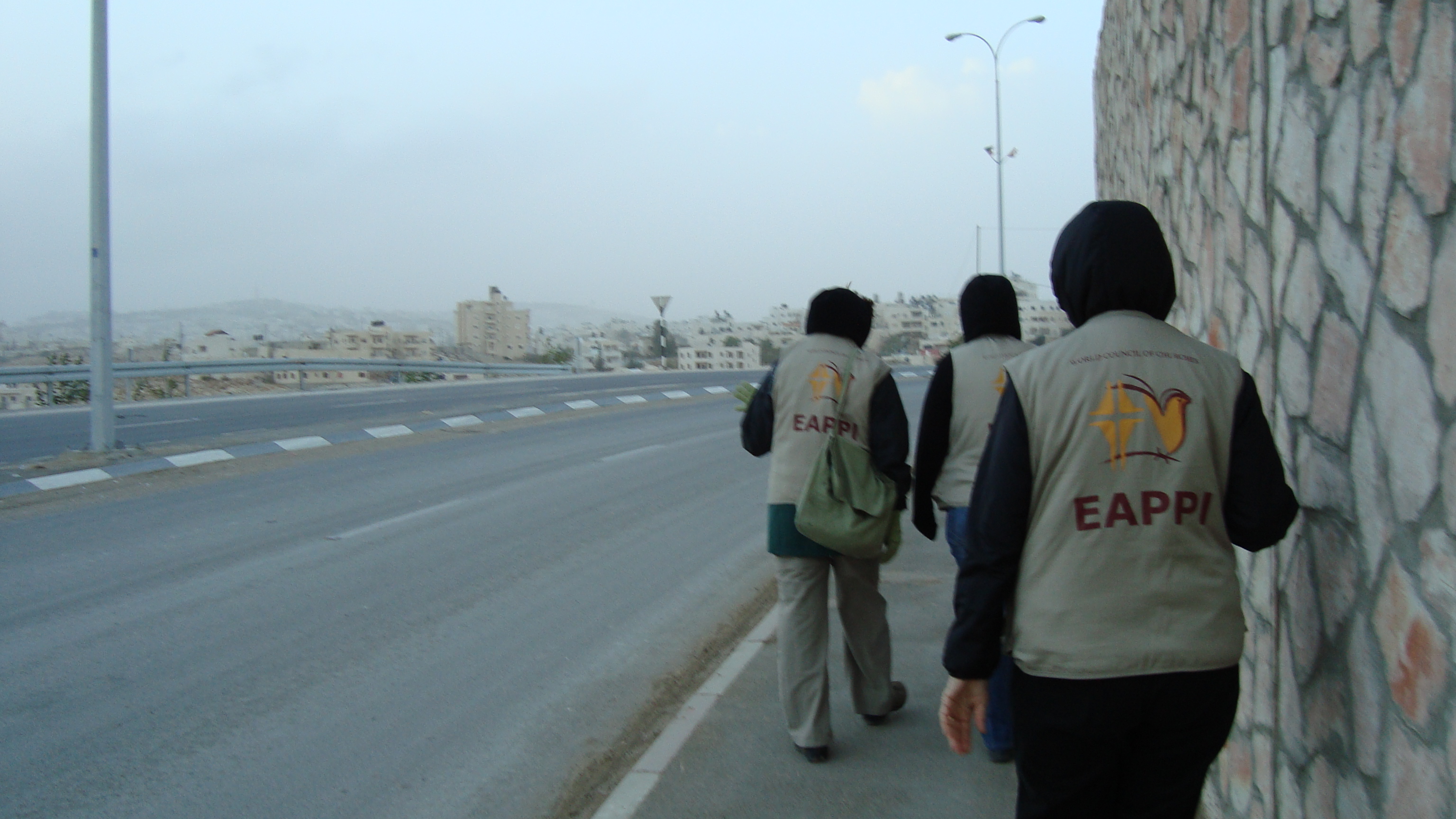
On this early December day, the wind was howling. On a blue bus, we passed through a checkpoint (in the Israeli separation barrier) leaving East Jerusalem, wound our way down many hundreds of metres into a valley on the way to the Dead Sea. But turned up again, climbing under the ridge of the Israeli settlement, Ma’ale Adumim, past the traffic circle, and into Al Ezariya or Bethany, the place people associate with Lazarus. My teammate and I, two of the newbies in Jerusalem Team 38, followed our Ecumenical-Accompanier (EA) mentors off the bus and then began the 20-minute trek to the Bedouin community on the edge of town. The sand was blowing so hard, I had no idea of the incredible view toward the Dead Sea until weeks later. I also had no idea of the incredibly bad black, acrid air that could hover over this place from the burning of the Jerusalem municipal garbage. All that we could see on that first afternoon was a tall traffic sign bent to the ground by the dry, cold wind.

Greater Jerusalem 2009 - Ir Amim: http://www.ir-amim.org.il/eng/?CategoryID=162

Our host greeted us outside in the cement, aluminum-roofed shelter where she, the EAs, and her young nieces and nephews had gathered weekly through the fall. We didn’t last long there with the wind. She invited us inside to the outer room of their home. We kept our winter layers on, as we would do inside and out for much of the winter.

And so began one part of our team duties that I grew to love in particular. Our host is about 26. She has two younger sisters, aged 20 and 16. They are three among many brothers living with their mother and extended family. In that Bedouin community, women stop socializing outside of the home in their teens. It is a conservative place. On a dry wind-swept hill. Our host described her family’s migration story over several generations. They are an internally displaced people due to the Israeli occupation of Palestine. Initially, they were forced out of their Bedouin, nomadic life from the Negev Desert. They moved to the area that became the massive, Israeli settlement of Ma’ale Adumim. Then, they were forced again to move and were unceremoniously dumped with their household stuffed into a long shipping container in the middle of winter on land loaned by the Palestinian community of Abu Dis. This Bedouin community has a 49-year lease and our host’s family has built a sturdy home, yet to be finished; in relative terms, they are lucky. Our host is unusual in that her father supported her interest in obtaining a university degree. The photos of the women and teen girls who are now dear to my heart show only their backs and hands. Taking photos of their faces is not permitted in this community.

Bedouin community - 27 Feb. 2011 - Photo: Sherry Ann


Weekly, we would arrive in time for tea with our host, her sisters, and little ones. Fresh sage would be put into our glasses. We accepted this hospitality – as quickly as we drank the tea, our glasses would be re-filled. When our host or her sister had finished their tea, four and five-year old nieces might pour a bit more into those same glasses and drink quickly. I never questioned why. After tea, our host would guide us to the top of the hill to the community caravan. Then we’d launch into a high-spirited hour of English conversation with a merry circle of 13-16 year old girls. Such an opportunity for them – given that they only see each other in school and on Wednesday afternoons in the caravan.

Sharing precious water - Bedouin community - 22 Dec. 2010 - Photo: Sherry Ann

One week in January 2011, after two of my EA teammates had visited, one of them described the following to me:

“What we learned later (a week or two after it happened) was that our host and her sister had no water, and so they had gone next door to their brother’s house and had borrowed water to serve us tea!  I believe that was the same day that I needed to use the bathroom and they apologetically said there was not much water, but they had a small amount (maybe a cup) in a little plastic watering can that I used to “flush”.” 

Such extraordinary hospitality…giving the last of their water to international guests…

The Israeli government has been controlling and restricting Palestinian access to water since 1967. In the West Bank, Palestinians may have the means to reach water in the ground but they are not allowed to do so. Yet, according to Article 43 of the Hague Convention, “Israel, as an occupying power over both the West Bank and the Gaza Strip, has the ultimate responsibility to as far as possible ensure that public order and safety are upheld in the territory it occupies, including securing the welfare of the population.” (Diakonia, 30 Apr. 2011) For human-rights reasons, an end to the Israeli occupation of Palestine is needed.

This posting, “Thirsting for Peace – Hospitality”, and the next few postings on this blog are drawn from a spiritual gathering on 1 May 2011 at Southminster-Steinhauer United Church, Edmonton, Alberta, Canada. For an audio version of this series of postings, please click here.

“Why I break the silence”

This is the voice of a former Israeli soldier, standing against the Israeli government’s occupation of Palestine. To hear his story, click here for a short, two-minute video.

All this week, the Israeli organization, “Breaking the Silence” will be releasing recent testimonies of Israeli soldiers talking about operations in the occupied Palestinian territories (i.e., East Jerusalem, the West Bank, and Gaza). In short videos, the former soldiers explain why they are choosing to break the silence.

Breaking the Silence has a Facebook page at: http://www.facebook.com/BreakingTheSilenceIsrael

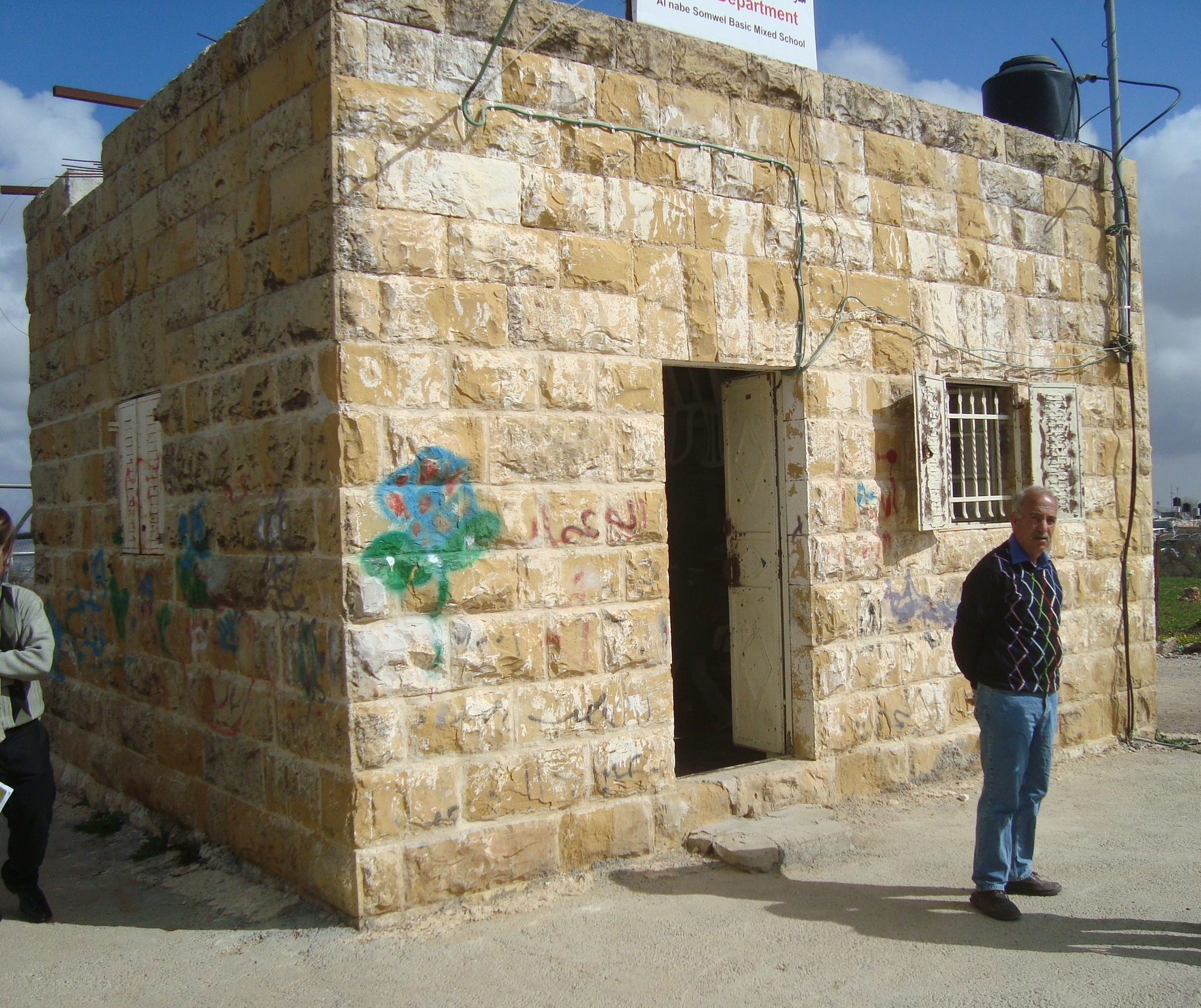
“Only the very old and those who have space to live – live here [in Nabi Samuel].”

 
Nabi Samuel – 1 March 2011 – Photo: Sherry Ann
Mosque with synagogue – Nabi Samuel National Park – 1 March 2011 – Photo: Sherry Ann

Nabi Samuel. Nebi Samwil. Al Nabi Samuil. The Tomb of the Prophet Samuel. Many are the variations of the name for this place.

About 200 people also call this place: home. And many more do so from afar, because the buildings that survived the Israeli occupation of this hilltop in 1967 are no longer big enough for all of the Nabi Samuel, Palestinian community. In each of these buildings, three to four families may live together.

The principal and one teacher of the single-room school walked us, two Ecumenical Accompaniers, through the community on 1 March 2011. This is a key hilltop in history – dating to the Crusaders and Saladin in the 10th through 12th centuries (Common Era). This importance is due in part to the location with its clear view of Jerusalem to the south. In addition, this place is associated with the ancient burial place of the prophet Samuel. Revered by Judeo-Christian and Islamic traditions, a monastery, a mosque, and a synagogue had all been built here by the 16th century.

Rules - Nabi Samuel National Park - 1 March 2011 - Photo: Sherry Ann

In the Israeli occupation of the West Bank, Nabi Samuel is a place of tension and destruction. In 1971, the village buildings surrounding the mosque were demolished. Palestinian residents fled to the eastern part of the small plateau and a dozen buildings there, and beyond, as far as Jordan. Since then, part of the mosque has been turned into a synagogue. The building stands like an island surrounded by an archaeological excavation site and a fence. A sign with rules outlines acceptable behaviour of all visitors, including the people of Nabi Samuel.

As we learned in early March 2011, only older adults and some families who have living space remain in Nabi Samuel. The village is located in Area C in the West Bank, according to the Oslo Agreement of the 1990s (click here). This means that the Israeli government has planning, building, and military control and has not permitted any new construction. The community does not have any health clinic or facilities. The school is only a few square metres. The village council has applied to build an additional schoolroom but has been denied that permit. A small, lean-to like bathroom was built on an outer wall of the school; it was demolished by the Israeli authorities. Currently, a re-constructed bathroom exists but remains unfinished – a result of living in the limbo of Area C. A skeleton of a frame for a shelter, for the children to use when playing outside at recess, waits for an Israeli permit. Desks and chairs for more than 10 pupils is optimistic in the existing school building. Other Nabi Samuel children travel to different schools with their parents on their way to work into the West Bank.

School - Nabi Samuel - 1 March 2011 - Photo: Sherry Ann

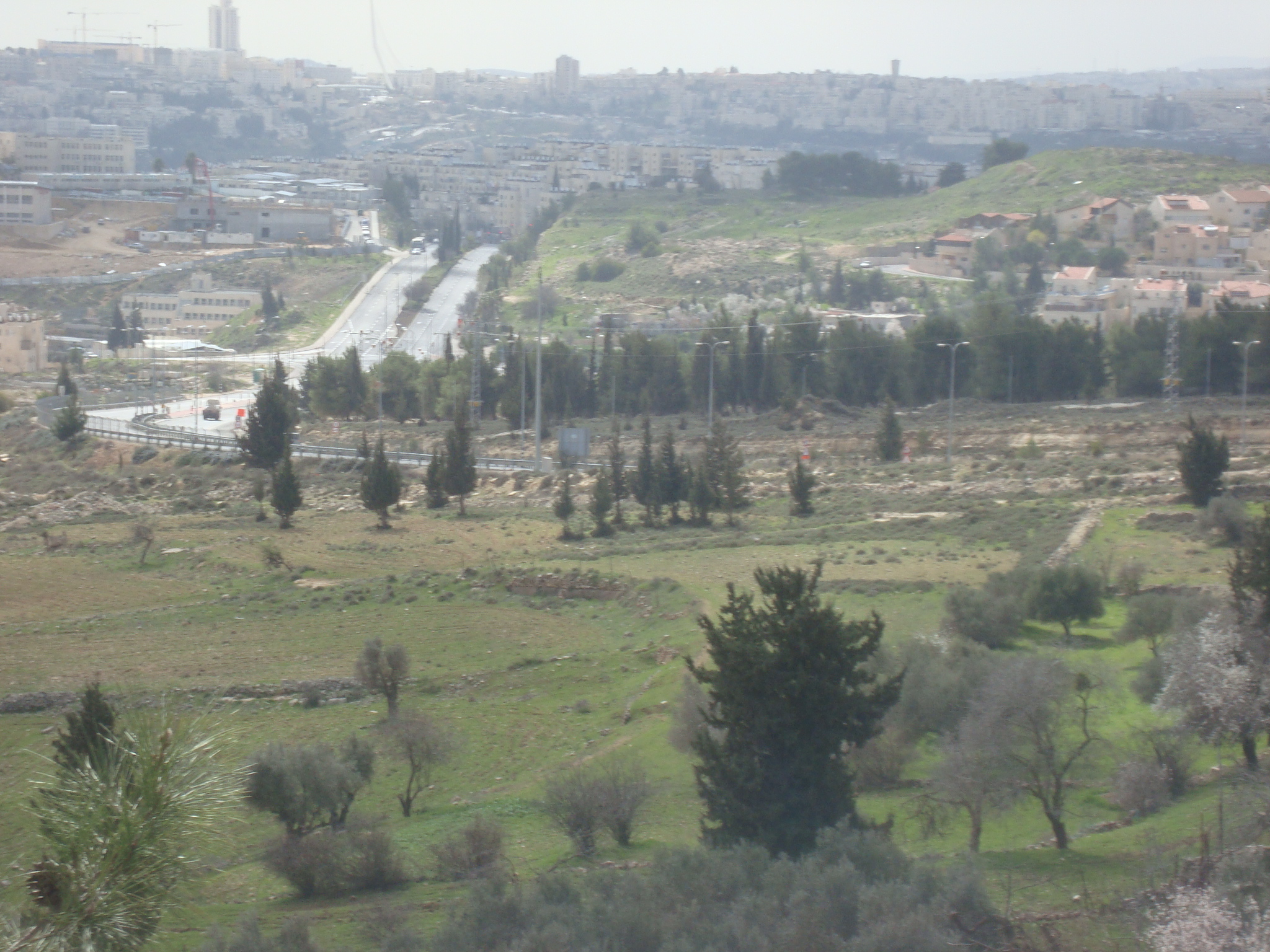
The people of Nabi Samuel can see East and West Jerusalem from their hilltop. Yet, they cannot use the newly built road that skirts the hilltop. They have access to only one road and it leads to an Israeli checkpoint (Al Jib) in a part of the Separation Barrier that is in the West Bank. (The 85% of the Separation Barrier/Wall built inside the West Bank is illegal according to international law.) Israeli settlers alone can speed along the new asphalt from West Jerusalem to West-Bank settlements north of Nabi Samuel. (Settlements are illegal because they are located in the West Bank. This is population transfer and a war crime according to Article 49(6) of the Fourth Geneva Convention. Click here). These settlements are considered to be part of Greater Jerusalem; so, while Nabi Samuel is located within the annexed Jerusalem municipality, it is zoned as the West Bank.

West Jerusalem and settler road as seen from Nabi Samuel - 1 March 2011 - Photo: Sherry Ann

The Israeli Separation Barrier has been built such that Nabi Samuel, a West-Bank community is located on the Jerusalem side of the Barrier. As a result, the Palestinian Authority cannot access the community to offer health and social services. Already it has divided two Bedouin families who also live on the eastern end of the plateau. In effect, they, all, are already “trapped”; they cannot obtain permits to work in Jerusalem. Each person is numbered at the Israeli checkpoint and has a West-Bank identification (ID) card. Without an Israeli number on an ID card, a Palestinian is denied access to the village; this impacts extended family members of Nabi Samuel residents. All movement of goods brought into the village must be coordinated with Israeli authorities in advance. Only three Nabi Samuel cars are registered at the checkpoint. This means that in a health emergency, which is occurring more frequently as the population ages, only a few options exist:

1)      A resident with one of the three cars can drive the ill person to the checkpoint.

2)      A phone call can be made for a Palestinian ambulance with a West-Bank licence. At minimum, the ill person will wait for three to five hours…if they are fortunate enough that an ambulance actually arrives.

Red Poppy - Nabi Samuel - 1 March 2011 - Photo: Sherry Ann

How then does this community live each day?  Actually, 16 Palestinian communities are trapped in this way due to Israeli government policy and practice.

On the warm spring day of our walk-about, we were greeted by the first wave of red poppies that arise with spring. At first glance, the red on the brown-green hillsides seems unreal…but close-up, these are living witnesses of the injustices of the Israeli occupation of Palestine. Each year, they appear… Despite the ugliness of the occupation, they are beautiful…a beautiful persistence… Reminders to continue advocacy for a just peace in this poignant place…

For more information:

Click here for a recent article.

Additional info here and here .

Alternative Tourism Group. (2008). Palestine & Palestinians Guidebook. 2nd Ed. Beit Sahour, Palestine. See: www.atg.ps

“We have no home.” Please note for the 2011 Canadian federal election.

21 Dec. 2010, 12:01 pm – “Demolition ongoing of a Palestinian (inhabited) home in Ras al Ahmud in East Jerusalem.”

Ras Al Amud, East Jerusalem - Outside the demolition - 21 Dec. 2010 - Photo credit: Sherry Ann

How does this connect to Canadians?

I witnessed the effects of this demolition. Please read the following account. Then, click here for questions to ask the candidates in your riding leading up to our federal election on 2 May 2011. The questions appear on p. 20 of the 2011 non-partisan Federal Election Kit produced by the United Church of Canada.

~~~~~

On 21 Dec. 2010, the second day of our term as Jerusalem Team 38, we received news of a home demolition. We arrived in the neighbourhood at 12:30 pm, having been stuck in traffic.

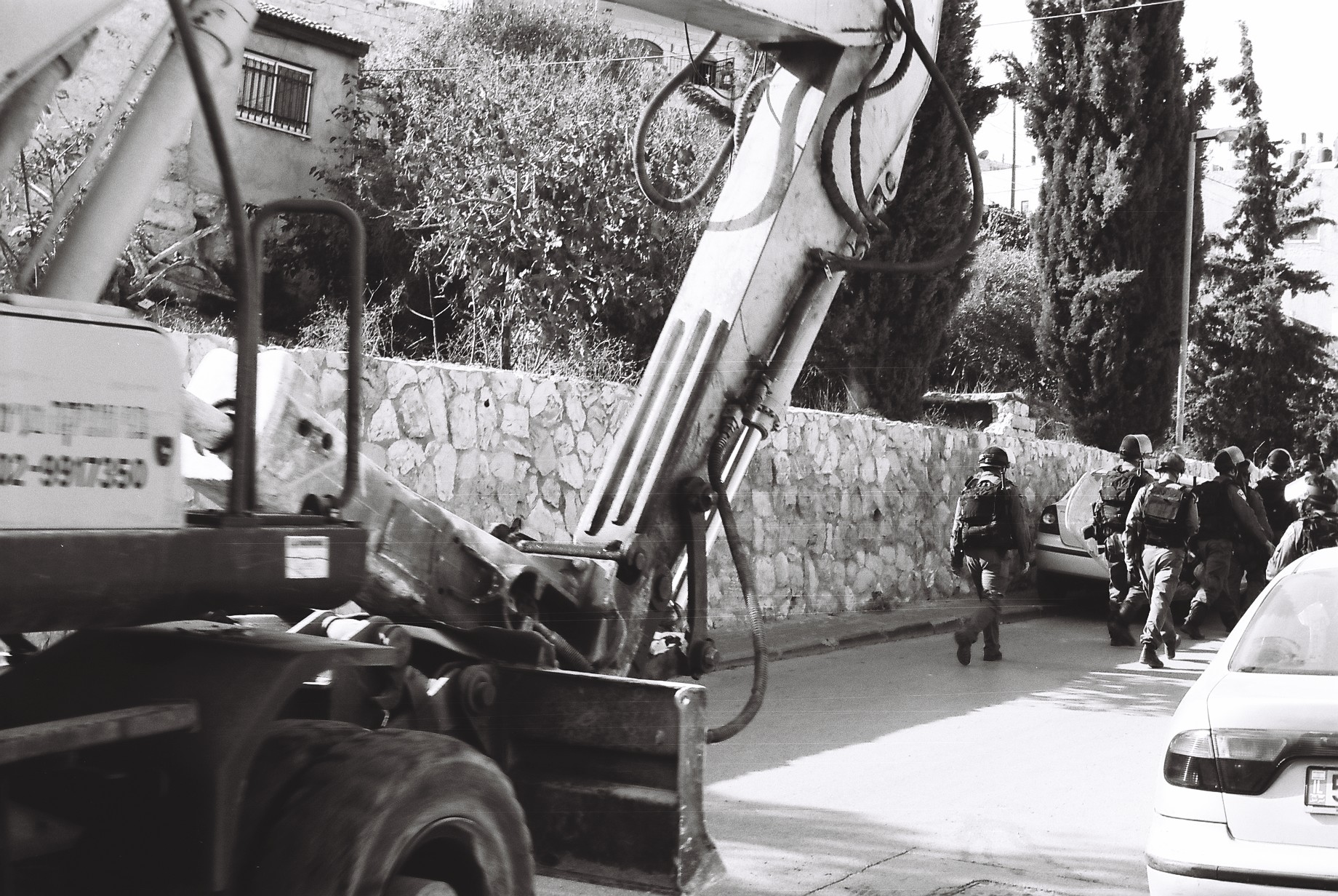
Israeli armed personnel leaving the demolition – East Jerusalem – 21 Dec. 2010 – Photo credit: Sherry Ann

As we approached the property where the demolition had occurred, we passed armed personnel with riot gear on the street and a heavy construction digger. Young local men told us we had missed the demolition. What could we say…

Heavy digger leaving demolition - East Jerusalem - 21 Dec. 2010 - Photo credit: G. Hess

We rounded the corner of the perimeter wall of the property and witnessed this.

Demolition - Ras Al Amud home, East Jerusalem - 21 Dec. 2010 - Photo credit: Sherry Ann


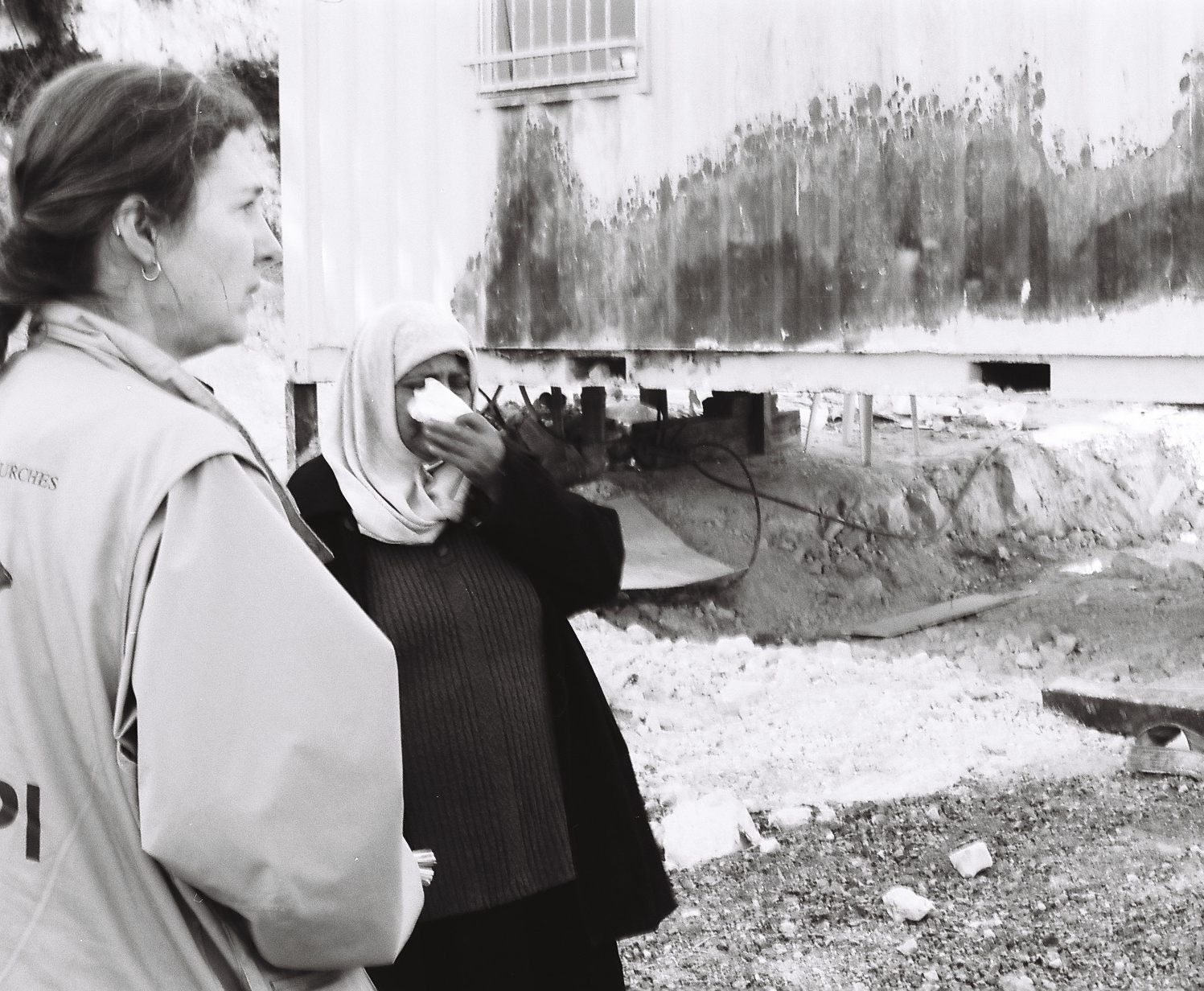
The family, whose property this is, had lived there for 6 years. The home was built in two, joined containers (like shipping containers) and sat on stilts. When we arrived, the family was tearing apart the inside of the house.

Home demolition - Ras Al Amud, East Jerusalem - 21 Dec. 2010 - Photo credit: Sherry Ann

Soon after, a woman in a car, with the blue letters of the United Nations, arrived and spoke with the family. Thirteen people had lived in the house: the father and mother and their seven children, including two of their grown sons’ families.

To my shock, we came to understand that it was a forced self-demolition (i.e., under the eyes of the Israeli armed personnel and the Hyundai heavy construction digger). The family had received a written warning 48 hours prior to 21 Dec. 2010. The family had started the self-demolition on 20 Dec. 2010 so that they wouldn’t be charged an additional demolition fee by the Israeli authorities.

"We have no home." - Ras Al Amud, East Jerusalem - 21 Dec. 2010 - Photo credit: Sherry Ann

They were told that if they didn’t move the house by the end of 21 Dec. 2010, the Israeli authorities were planning to return on 22 Dec. 2010 to flatten the entire structure. The family had already paid 20,000 NIS (nearly $6,000 CDN) to the Israeli government. If they didn’t move the house, the full demolition would occur and they’d be fined another 100,000 NIS (almost $30,000 CDN). Further, family members would be imprisoned. They planned to move the container by that same night.

~~~~~

How does this happen?

Some background: Israel occupied East Jerusalem along with the West Bank in 1967. Occupation is regarded internationally as a temporary situation. Permanent changes in occupied territory are not allowed except for military necessity or to benefit the local population (Article 43, Hague Regulations). Destruction of property is not allowed (Article 53, Fourth Geneva Convention). Confiscation of property (Article 46, Hague Regulations) is not allowed. The forced displacement and inhumane treatment (e.g., denying essentials like water) of the local population is…not allowed.

However, Israel began its self-declared, illegal annexation in 1967. Using force, it expanded the municipal boundaries of East Jerusalem by annexing 28% of West Bank. The Israeli government has been moving its citizens into occupied East Jerusalem. This is population transfer and is a war crime [Article 49(6), Fourth Geneva Convention]. The Israeli government’s construction of the Separation Barrier (Wall) to the east of the internationally recognized Green Line (i.e., the 1949 Armistice line following the declaration of the state of Israel) is also illegal (International Court of Justice, 2004; click here, p. 3). Finally, house and infrastructure demolitions  are a war crime because they are a grave breach of the Geneva Conventions (click here and here).

 And yet, the Israeli authorities declare that homes built without building permits in East Jerusalem are “illegal” structures. Through this declaration, they issue demolition orders.

In Jerusalem municipal planning, only 13% of East Jerusalem is zoned for Palestinian construction. Most of that area is already built-up. Obtaining building permits for Palestinian construction is practically impossible.  To obtain a permit to build or expand a home, a Palestinian may be required to open a land registration file (proving ownership). This may be complicated by refugee status, absentee ownership, and/or partial ownership by the Israeli government. A detailed plan is required demonstrating that the construction will connect with existing public infrastructure (i.e., roads, water). This may be difficult to demonstrate when the Jerusalem municipality has failed to provide that infrastructure. The density allowed is half of what is permitted in Israeli settlements (in East Jerusalem and thus illegal) and in West Jerusalem.

 Finally, the cost of a permit may be prohibitive. A basic fee (e.g., $25,700 CDN for a small 200 m2 building on a 500 m2 plot) is charged in the application process. And then an additional fee (relative to the size of the proposed construction and the income level of the neighbourhood) will be charged. Together, these fees may be as high as the cost of construction. The process for applying for a permit may also take several years. Many more permits are needed than are granted to Palestinians in occupied East Jerusalem.

~~~~~

When asked where they would move the house: “To the street”, one of the older sons said and shrugged. They planned to live in a tent on the property. They felt that if the Israeli authorities were to revisit the property, they could move a tent away quickly. They felt they had nowhere else to go.

In the final conversation that we had with the father, he said, “We have no home.” He told us that he really appreciated EAPPI being there with them: “Pray for us. Thanks for coming. Maybe because you come here and are in solidarity [things will be better].” “I will be alone but I know others will be here [i.e., because you will tell the world].”

As we were leaving, a younger son, about 12 years old, arrived from school. He looked stunned and was hanging close to his mother though not able to be with her because she was being interviewed by a journalist.  

What happens to families after a demolition? According to a March 2011 report, life may be very unstable for a significant proportion of families for up to two years after a demolition:

“In addition to economic losses resulting from fines, legal fees and the lost investment in homes, the contents of the house are often destroyed during demolitions. Families often continue to pay instalments on fines long after the structure is demolished. An additional economic burden following the demolition is the payment of rent, which places considerable stress on already limited financial resources. Combined with psychological distress and debt, displaced families have few alternatives to relocate, since the land they build on is generally the main family asset.” (UNOCHA, March 2011, pp. 38-39)

Home? - Ras Al Amud, East Jerusalem - 21 Dec. 2010 - Photo credit: Sherry Ann

“Given their vulnerability, children, who represent over 50 percent of the Palestinian population, are frequently disproportionately impacted by displacement. According to the survey, in the immediate aftermath of a demolition children face interrupted education, a reduced standard of living and limited access to basic services, such as water and health. The survey also found that emotional and behavioural problems persist even after the six month period following the demolition”. (UNOCHA, March 2011, p. 39)

Relocation may mean having to look for available, affordable housing…outside of East Jerusalem…in the West Bank. This in turn may result in the loss of permanent residency in East Jerusalem… and the loss of home on a collective, Palestinian level…

What can we do as Canadians? “In voting against resolutions of the United Nations Human Rights Council condemning Israel’s violations of Palestinian human rights, Canada has also failed to live up to its obligations to uphold respect for international human rights and humanitarian law.” (Federal Election Kit, 2011, The United Church of Canada, p. 20)

What to do? Ras Al Amud, East Jerusalem - 21 Dec. 2010 - Photo credit: G. Hess

We can vote on 2 May 2011.Leading up to the election, we can ask our local candidates these questions:

“Will you and your party continue to support United Nations resolutions on the Israeli-Palestinian conflict, which are based on established International Humanitarian Law, in order to secure a just resolution to the conflict?

• Will you and your party live up to Canada’s obligations to uphold International Humanitarian Law by condemning acts of violence against civilians by both sides?

• Will you and your party play a constructive role in promoting a negotiated and just peace agreement between Israel and Palestine by bringing all parties concerned to the table?” (Federal Election Kit, 2011, The United Church of Canada, p. 20)

Read more here:

http://www.ochaopt.org/documents/house_demolition_23_12_2010_press_release_english.pdf

http://www.ochaopt.org/documents/ocha_opt_jerusalem_report_2011_03_23_full_english.pdf

http://unispal.un.org/UNISPAL.NSF/0/7EA0B394A427A1428525784900543953

http://www.united-church.ca/files/getinvolved/takeaction/2011-election-kit.pdf

Bomb in Jerusalem

In a small bag.

Jerusalem Map Detail - Jerusalem Municiple buildings - 27 Dec. 2010 - Photo: Sherry Ann

Near the Central Bus Station with people coming and going. And standing.

She was hurt and died.

She Who is my mother.

Your mother.

“So countless are all sentient beings, and so many their births throughout time, that each at some point was your mother.”*

Poor One who left the small bag…

Such pain packed there…

West Jerusalem skyline - 1 March 2011 - Photo: Sherry Ann

-Sherry Ann (26 March 2011)**

*Joanna Macy quoting a Tibetan nun.    Joanna Macy with Norbert Gahbler. (2010). Pass It On: Five Stories That Can Change the World. Berkeley, CA: Parallax Press, p. 53.

**A bomb exploded from a small bag that was left near the Central Bus Station, West Jerusalem, on 23 March 2011. Click here, here, and here for more information.

Freedom of Movement.

Can I go?

I’m looking forward to home

Ready to go - 5 Mar. 2011 - Photo: Sherry Ann

Please wait.

Why did you come here?

When?

How?

Why?

Why?

Who sent you…

Can I go now…?

Not you.

Go!! Get out of here. Move away…

Please wait.

Who brought you here?

How could you afford to come here?

Why did you come…

We know. But WHY?

Go. - 5 Mar. 2011 - Photo: Sherry Ann

Can I go?

Go. Don’t ever come back.

Come back and see…

The freedom of this democracy.

Why did you come THAT way?

Can they go, please?

There…?

Where?

No. Not them. There.

You can go.

But, please wait here.

6.

Did you pack this?

What is this?

Here. Take your things.

But wait. Please.

Put this in that. Then, come here.

Go back.

Can they come, please?

Wait…

Who is it that you say that you are?

No. Not your name.

Where is your number?

Ah, but are you that person?

She is Palestinian.

Have you asked her name, perhaps?

Leave. Now.

No. Wait.

Orange stickers everywhere.

Bright orange - 5 Mar. 2011 - Photo: Sherry Ann

“You’re late.”

No. You cannot take that. Her. She stays.

There. Behind that line.

No moving allowed.

Actually. Move out.

Yes. Go. Away.

“May you go in peace and return in peace!”*

“Walk straight ahead to passport control.” – 5 Mar. 2011 – Photo: Sherry Ann

-Shock-

Who did they think I was?

What did they see?

Not me.

Who am I then?

No vest. Two backpacks, and a small booklet of pretty stamps. Canadian.

A small shell as keepsake.

A plastic star.

A marble of affirmation.

And coins clattering down to the corner of the grey tray. After the body search. Help me? She found my earring backing in the dust of the carpet.

What are your names? The 8 or more of you who tried to strip me bare?

You never asked mine.

I was, “Miss”.

And not Palestinian.

A ‘3’ last time. A ‘6’ this time. 6 is the highest security risk.

Palestinians: ‘6’ every time.

6. Every time. - 5 Mar. 2011 - Photo: Sherry Ann

Read more here about this reality of the occupation.

*Actual greeting at the Zaytoun Checkpoint into East Jerusalem.

“Structural violence is silent.”

Jean Zaru, a Palestinian Quaker woman*, offers this insight as she writes about the impact of the Israeli Government’s occupation of East Jerusalem, the West Bank, and Gaza. She offers a lens for analyzing structures of injustice such as political, cultural, economic, and social structures. In this posting, I focus on the Jerusalem Light Rail Train (JLRT) and how it is part of the silent, economic structural violence occurring in East Jerusalem. Through such violence, Palestinian society and Israeli society in Jerusalem are being torn apart. Ending this occupation and finding a just peace is critical for future co-existence.

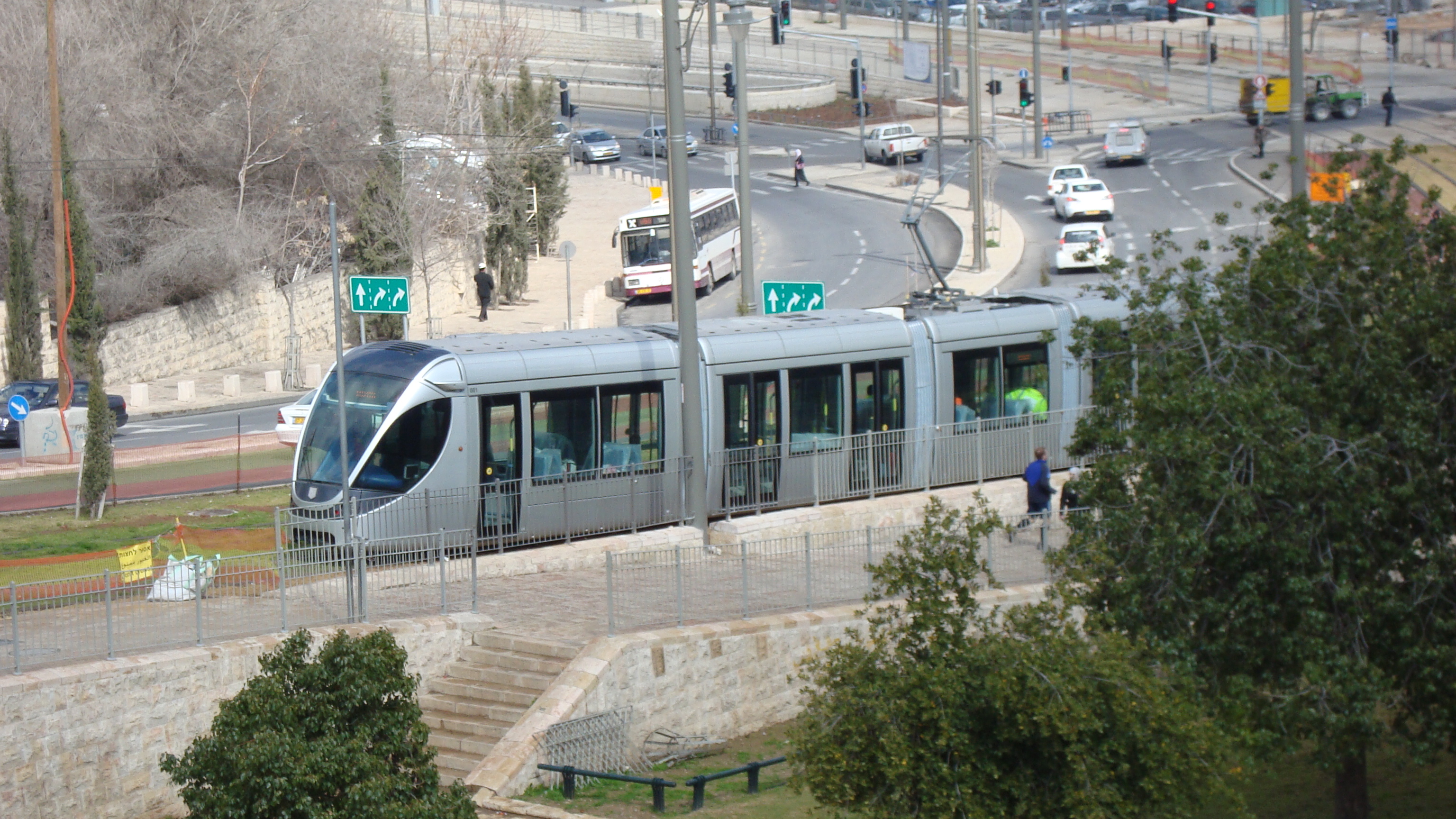
JLRT on the Green Line - Westbound, Jerusalem - 13 Feb. 2011 - Photo: Sherry Ann

The JLRT appears at first glance to be evidence of improved infrastructure in East Jerusalem. It has a sleek design and a street-level entry system for passengers. (See videos #1 and #2  [At the 4 min. point of #2, the JLRT drives past the site of the Palestinian home demolition in French Hill; I described it on 5 Jan. 2011]). However, this new transportation feature is a bizarre sight amid the crumbling environment that is East Jerusalem. The Jerusalem municipality is responsible for maintaining the infrastructure of East Jerusalem; and yet, despite paying into the same tax system as people from West Jerusalem, those in East Jerusalem are watching their area fall apart.

JLRT tracks on the Green Line – West Jerusalem is on the left. East Jerusalem is on the right. – 13 Feb. 2011 – Photo: Sherry Ann

“…the Jerusalem municipality has not provided adequate planning, construction or infrastructure to their [East Jerusalemite] neighborhoods for decades, a legacy of discriminatory neglect that starkly contrasts with the general situation in West Jerusalem and in Jewish settlements in East Jerusalem. 115 … The municipality itself is responsible for the poor condition of the road and sewage networks in East Jerusalem, and for the dense and unplanned nature of its residential areas, in sharp distinction to Western Jerusalem.” (Separate & Unequal, 2010, p. 50; the superscript note “115” refers to the following document: ACRI, “Human Rights in East Jerusalem – Facts and Figures, May 2010,”).

JLRT Westbound by the Old City, Jerusalem - 13 Feb. 2011 - Photo: Sherry Ann

Upon closer examination, the JLRT is an ominous development. East Jerusalem is occupied, yet through illegal settlements, the Israeli Government is transporting Israeli citizens into this occupied territory.  Through the JLRT, settlers are being given ease of access to central Jerusalem  for work, school, and other daily activities. (See the locations of settlements in the deep purple on this map). This population transfer is a war crime according to Article 49(6) of the Fourth Geneva Convention (see here and here).

By creating this people-mover system, the Israeli Government is proceeding with its annexation of East Jerusalem toward its goal of a united capital for the state of Israel. Such annexation is illegal according to international humanitarian law (See here and here).

Public notice banner - Shu'afat, East Jerusalem - 10 Dec. 2010 - Photo: Sherry Ann

Planning for the JLRT began in 2000. By 2020, the network is to have eight lines. The first line is nearing completion. Since December 2010, we have watched trains out for test drives and we have sat in public buses in the traffic caused by the construction, particularly in Shu’afat. This is a neighbourhood through which the JLRT will travel as it heads north and then east. To build the JLRT tracks, the Israeli Government has expropriated Palestinian private property; in addition, public roadways and parking spaces have been taken over to reconfigure space for the JLRT tracks. With little space in which to drive and/or park, local shoppers have been less able to support local businesses. The destruction of property in occupied territory is illegal according to Article 53 of the Fourth Geneva Convention and the confiscation of property in occupied territory is illegal according to Article 46 of the Hague Regulations. Worth noting is that only 3 of 23 stops on this first JLRT line are in Palestinian areas. The other 20 stops are located in West Jerusalem, along the Green Line, and in the illegal settlements of East Jerusalem.  (Note: The Green Line is termed Route No.1 on this map.)

JLRT track construction - Shu'afat, Jerusalem - 10 Dec. 2010 - Photo: Sherry Ann

I perceive that the JLRT is an example of economic structural violence. Jean Zaru observes that, “Violence, after all, is not only about war and weaponry. Political, cultural, economic, and social structures have been at work in a destructive way throughout our community” (Zaru, 2008, p. 61). The examples that she gives for economic structural violence include restricted freedom of movement by Israeli  road blocks and control of roads; economic marginalization and exclusion; and destruction of civil society and infrastructure.

After three months of riding the Green bus to and from Shu’afat refugee camp, Qalandiya Checkpoint, and the Old City (all in East Jerusalem), this violence seems mind-bendingly subtle. Looking out the window, I see a diversity of people in terms of ethnicity, race, religion, age, gender, profession, civilian/military status. Yet, East Jerusalem is not a place in which all of these people mix and mingle easily. The Israeli citizens who live in East-Jerusalem settlements have an illegal presence. I’ve heard local people speculating about the anticipated ridership of this JLRT; it would seem that West Jerusalemites and the illegal settlers may benefit most. An unnamed separation exists amid the apparently benign streetscape.

JLRT Safety banner – Shu’afat, Jerusalem – 10 Dec. 2010 – Photo: Sherry Ann

I regard Jean Zaru’s analytic lens helpful. She writes:

“Structural violence is silent. It does not show. Television captures the direct violence and most often the violence of the powerless and the hopeless, and it is headlined as terror. One basic weakness in most conceptualizations of violence in the Israeli-Palestinian conflict is the basic assumption of symmetry, which views contending parties in conflict as being equal. After all, the conflict is there because we are unequal. We are unequal in access to power, media, and influence. But we insist that we are not unequal in our rights.” (Zaru, 2008, p. 62)

The corporate complicity in the construction of the JLRT is a dimension of economic support for the Israeli Government’s occupation of East Jerusalem. See this article and its references for more info.

Peace from the Old City Ramparts - JLRT tracks, Green Line - Jerusalem - 13 Feb. 2011 - Photo: Sherry Ann

With this posting, I am beginning my transition from an on-the-ground witness as an Ecumenical Accompanier. Over the next week or two, I will return to the vantage point of Canada. I will become an Ecumenical Advocate holding dear the relationships that I’ve developed here with those who have shared their experiences with me.

Please pass along the address for this blog to friends, family, colleagues, and acquaintances. Check out the links for various publications. We need to start talking about these silent forms of violence as much as we talk about the news headlines. In this way, we as global citizens can contribute to ending the silence and the occupation.

* Jean Zaru is the Presiding Clerk of the Friends Meeting House in Ramallah and a founding member of Sabeel, an ecumenical Palestine Liberation Theology Center in Jerusalem.

For additional information, see:

Barghouti, O. (2009). Derailing Injustice: Palestinian Civil Resistance to the “Jerusalem Light Rail”. Jerusalem Quarterly, 38, 46-58. Available here.

The Civic Coalition for Defending Palestinians’ Rights in Jerusalem. (2009). The Jerusalem Light Rail Train: Consequences and Effect. Jerusalem: Authors. Available here.  

Diakonia’s webpage regarding the JLRT and its violation of international humanitarian law. Available here.  

Ecumenical Accompaniment Programme in Palestine and Israel. See: http://www.eappi.org/

Human Rights Watch. (2010, Dec.). Separate and Unequal: Israel’s Discriminatory Treatment of Palestinians in the Occupied Palestinian Territories. New York: Authors. Available here

Zaru, Jean. (2008). Occupied with Nonviolence: A Palestinian Woman Speaks. Foreword by Rosemary Radford Ruether. Minneapolis, MN: Fortress Press.
Choosing to participate is an amazing act of courage to know ‘the other’.

In May 2009, 22 of us from Canada shared a very special visit in Jerusalem with Dalia Landau. She co-founded Open House Ramle with Bashir Al-Khayri in 1991. She continues to serve as Co-Director of Open House as it celebrates its 20th anniversary in 2011. On that day in May 2009, she described the story that she shares with Bashir, as recounted in the book, The Lemon Tree, by Sandy Tolen. In describing how her life is intertwined with Bashir’s life, I came to appreciate how Dalia has, time and again, chosen to live in the heart of the Israeli-Palestinian conflict. Many times, she has been presented with a choice to leave the tension, confusion, and pain of the conflict. Each time, she has chosen to continue to lean into it to try to make a difference.

Dalia Landau - Jerusalem - 14 Feb. 2011 - Photo: Sherry Ann


Through Open House, she and others, who are also trying to make a difference, have been creating spaces for children and youth who are Israeli and Palestinian, Jewish, Muslim, and Christian to play, talk, and listen to each other. 
On 14 Feb. 2011, three of us, Ecumenical Accompaniers, shared a meal with Dalia. The evening was very meaningful for us who have spent almost three months walking with Palestinians and Israelis who are working to end the Israeli Government’s occupation of Palestine. We have seen and heard conflict and pain. We have felt so many emotions. We have asked to hear people’s stories. We have discussed details of international humanitarian law. We have asked for clarification. We have listened, and we have listened some more. Even amid the challenging moments, we have also shared the joys of daily life here. We have shared a sense of solidarity with those who have opened their hearts and homes to us.

Dalia and we, 3, Ecumenical Accompaniers - Jerusalem - 14 Feb. 2011 - Photo: Guest

On that evening with Dalia, I came to appreciate how we, EAs, have been able to develop relationships with both Palestinians and Israelis. Yet, due to the Israeli Government’s ‘security’ efforts, Israeli and Palestinian societies are separated more and more each day. You might recall how I quoted Angela Godfrey-Goldstein’s comments in December about this apartheid state: “It will change only when ordinary people understand what is going on.”

Here’s a glimpse of what Dalia and the Open House staff and volunteers are doing to help children and youth in Israel and Palestine to make informed choices with each other in mind. With the support of Open House, these young ones are growing into extraordinary people, working for social justice and peace. Click here and here

Dalia shared the following reflections:

“There’s a whole generation that is growing that doesn’t know each other. Before the First Intifada [started in 1987], Israelis used to go massively to Bethlehem – it was good to know each other – going for the restaurants and the souk. Now, there’s a whole generation [of Palestinians] who doesn’t know Israelis. For them, we’re a mythology. And, the same is true for the other side.”

“Just knowing each other makes a difference. We work long term with people at Open House. We start very early [for example, at two and three years of age]. Mainly, we work with Arab Israelis; it’s more difficult to arrange for West Bank youth to participate. One individual serves as a window to a whole other world. This has been very strong in my life. How through one person with an authentic relationship, you realize: They’re like me.” [Click here.]

“It was also when I met Bashir when they knocked on the door in 1967 to see the house, their house, they were three people, from the same family. Then I went to Ramallah to visit Bashir’s family; it was just after the [1967] war… . His family was probably asking, “Who is this person?” I could see their thoughts…. But it’s through the ‘joy in the encounter’ – then, one creates trust. Depending on the age group, you can bring up issues. Like teens, during the [Second] Intifada, they would discuss incredibly deep issues – it moves the heart – how they stuck it out. They came back every week – it was unbelievable – the courage of it. One group of Jewish Israelis, they were 18 years old, pre-army, found us on the Internet. They were doing social service (e.g., volunteering at schools to speak about ethical issues). They wrote describing, “We’re going to the army in one year yet we haven’t ever met any Arabs”. They had grown up in Jewish neighbourhoods in Tel Aviv and had had no dialogue with Arabs. They wondered, “How were they going to justify going into the army. They asked Open House if we would arrange a dialogue for them [with Arab Israeli teens.] We met with them for one year. They were very evolved human beings. It was during the [Second] Intifada. The richness of the issues they raised! Of course, the Arabs [teens] confronted them: “Why don’t you do conscientious objection?” Most of the Arab and Jewish teens agreed to disagree. Some friendships broke down. Of course, the encounter is very, very deep. If it’s compulsory service, a person has no choice. But they wanted to explain why going into the army was important [for them]. For example, “We protect all citizens including you [as Arab Israelis].” “I want to be in the IDF – the Israeli Defence Force. Without the army, Israel wouldn’t exist for a moment. So, we’re paying the price.” Click here.

Dalia & the Open House Ramle website - 14 Feb. 2011 - Photo: Sherry Ann

“If you visit the website and then, scrolling down on the left-hand side, you will see “Highlights”, including a discussion by young adults after the “War in Gaza” – it was so deep – that type of discussion needs careful facilitation to avoid acrimonious dynamics. A discussion can make tensions worse than they were prior to the discussion. Through my life, I have learned methods for creating sacred space in the middle and appreciate how each person brings their reflection where they are in the moment – allowing silence – calling the other person by name – “What do you feel after this war” – It’s extremely important when people start to become defensive – that’s the opposite of inner listening. Developing these techniques of discussion has been part of my own journey.”

“In the Open House summer camps, the children are choosing to participate in an amazing act of courage to know ‘the other’. While parents support the activity, each child is making the choice to participate. Some grow up to become counselors in the summer camps. The first summer camp was held in 1992 with children who were 8 to 10 years old. Then we included children up to 13 years and children as young as 6 years.”

“The summer camp and teen programming have two objectives: (i) affirmative action for the Arab population (e.g., developing respect for culture and promotion of the Arabic language); and (ii) co-existence – two communities living together. Both types of programming require funds not only for staff but for materials and resources; the children are not just spending time together but also working together (e.g., creating a sculpture of sheep in a public garden in Ramle). They have created an Open House mosaic in the centre of Ramle – they used discarded materials which required breaking them down and designing a concept for the piece.”

“For older children, high-school students, “The Journey” program, they travel throughout the country and hear the narratives of all parties. It is an intense week-long experience.”  Click here and here

“We also have big events in cooperation with Neve Shalom/Wahat al-Salam in which we bring together young people for two or three days, twice each year, for music, dance, tents, and discussion. That programming has been supported by a Japanese Buddhist organization for over ten years. Developing and continuing funding relationships is critical. Some organizations offer three-year, seed funding; however, regular and dependable support is needed. For example, one woman in Holland has created a tax deductible venue in which four churches participate. Another example is one professor who turned to his friends at a university. They now do an annual collection at Christmas time, in support of Open House. A group at a synagogue in the US, working with local Palestinian Muslims, created a postcard project in 2010. They asked for drawings from children in the Open House nursery school and the summer camps. Those drawings were scanned and printed on postcards and cards which are sold in packages of ten cards for $20 (US). The postcard idea would be easy to adopt elsewhere because the drawings are already scanned.”

Dalia & Sherry Ann – Jerusalem – 14 Feb. 2011 – Photo: Guest

As Open House Ramle celebrates its 20th anniversary in 2011, they will be renewing the year-round co-existence programming. The summer camps  have continued every year but the year-round programming stopped for a few years due to lack of funding. The hope is to undertake a joint sculpture project. Through the course of one year, children in an Arab school and children in a Jewish school will each develop a sculpture or a complex of sculptures with a professional artist who is an Orthodox-Christian Arab. At the end of the year, the children will exchange the pieces as gifts. For that year, they will be thinking of ‘the other’.

As I begin to wrap up my time as an Ecumenical Accompanier in Palestine and Israel, reflecting on these co-existence efforts of Open House is helpful for seeing the hope that persists in this place. I invite you to watch this two-minute video [Click here. A new window will open. Scroll sideways to the right – drag the bar sideways at the bottow of the browser window. Wait for the video to download – will take about 2 min.] 

To visit additional resources, look for the underlined words (they’re hyperlinked) throughout this posting including three links below.

Radio documentary about The Lemon Tree by Homelands Productions 

A clip about Dalia Laudau and Bashir Al-Khayri’s story in this documentary film, “Holy Land: Common Ground” 

Sandy Tolen on writing the book, The Lemon Tree

“Go in Peace”

On visiting Eilat…a thin wedge of desert between the Sinai Peninsula in Egypt and Jordan…on the Gulf of Aqaba…

This slideshow requires JavaScript.

It’s Elemental

In awe

Hearts pounding

Disbelieving

Braced in the wind

In awe of this element of water

Salty

Surging

We stand, with cameras poised

Trying to capture, though never completely,

The sight of this surf.

But it isn’t just a sight or sound or taste.

It is bigger, a feeling that moves through, and past, each and all of us.

Where are you from?
What language do you speak?

Does it matter…

It’s a feeling that moves through, and past, each and all of us.

“Go in Peace”

in awe…

-Sherry Ann (15 Feb. 2011)