“If money were used for peace, things might be better.”

Eric Yellin, from Other Voice (click here), shared this thought with us, the Ecumenical Accompaniers of Group 38, on 26 January 2011. We were on a bus during our midterm orientation, touring the Israeli community of Sderot. From the outskirts of Sderot, you can see the Gaza Strip, one of the Palestinian territories controlled by Israel. Ronni Keidar, an Other-Voice member who lives in an Israeli community located immediately beside Gaza, also joined us on that sunny day in January.

Eric Yellin & Ronni Keidar, Other Voice – Gaza in the background – 26 Jan. 2011 – Photo: A. Farr

As Eric said, Sderot has become one of the most protected towns in the whole world with its shelters and shielded buildings. Constructing all of these ‘safe’ places is a very expensive venture. The bus stops are specially built to serve as shelters from rockets; steel shields are being built over school buildings; and safe rooms are being added to apartment buildings. 

School with a steel shield - Sderot - 26 Jan. 2011 - Photo: Sherry Ann


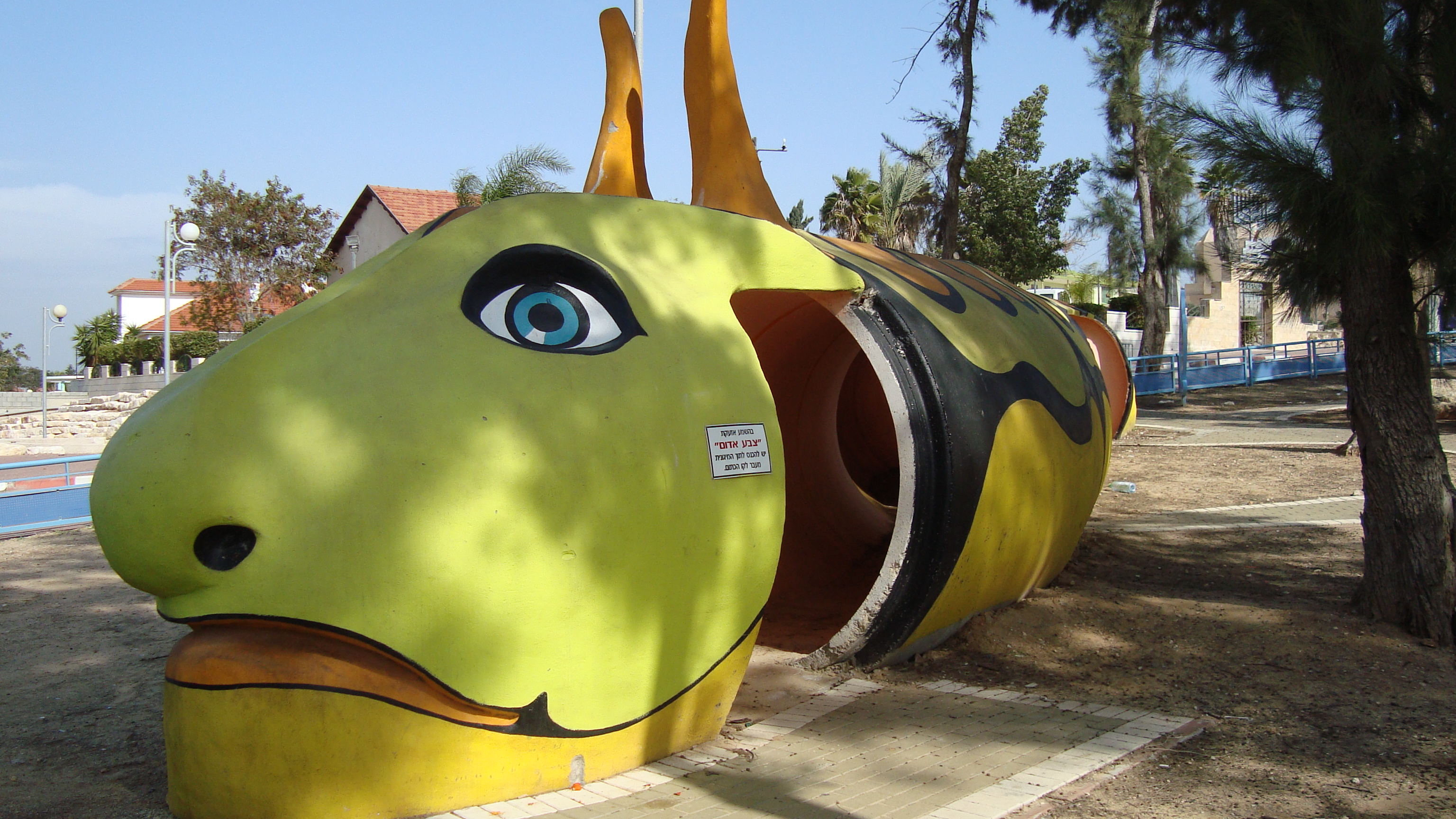
The sign on this playground rocket shelter (in the shape of a caterpillar) reads: “When you hear the ‘colour red’ go into the safe space beyond the orange line”.

Playground rocket shelter – Sderot – 26 Jan. 2011 – Photo: Sherry Ann


According to the Other-Voice website, this is a non-partisan, grassroots group seeking “a civil solution in the Sderot-Gaza region”. They have “no political aspirations. We are citizens of the Sderot region and the Gaza region. We are interested in finding creative ways of hearing a new voice from the region and for promoting hope and non-violent actions for the benefit of the locals who live here in Sderot and in the Gaza Strip” (Click here).

To me, Other-Voice members seem to be trying to maintain a human connection, regardless of the political ‘chess games’ being played in their midst. What if for a day or a week or two weeks, we, the people who live on this planet, agreed to sit down and talk with one another? Not as politicians, but as people. What if the ugly turnstiles in the Israeli Separation Wall/Barrier between Israel and the West Bank and the gates at the crossings between Israel and the Gaza Strip were suddenly swung open? What if the fishing boats of Gaza were free to come and go in the Mediterranean waters and ordinary citizens from across the water and around the globe were free to visit?

What if the money spent on the appearance of security were re-directed to supporting clean water, sanitation, and holistic diets…that would support child, youth, and lifelong health?

What if…?

If you are interested in the current efforts of global citizens, including Canadians, who are seeking to end the Israeli occupation of Palestine and who are standing for a just peace in the shape of Freedom Flotilla II – Stay Human, be sure to watch the following website over the next few days (click here) regarding the Canadian Boat to Gaza, The Tahrir (Arabic for “liberation”).

Some of you may have heard Michael Enright’s recent interview (19 June 2011) with Amira Hass on CBC Radio (clicke here). As described at that CBC Radio webpage, Amira Hass “is the only Jewish Israeli reporting from the occupied territories. She is a correspondent for the Israeli newspaper Haaretz.” Recall my recent postings about access to water – Amira Hass comments on this issue early in the CBC interview.

Amira Hass is one of the global citizens travelling on the Canadian Boat to Gaza, The Tahrir. For some of her recent postings from Greece, click here.

Recent articles by Amira Hass include:

1 July 2011 (just posted at Haaretz) – click here.  

28 June 2011 – click here

26 June 2011 – click here.

6 June 2011 – click here.  

Here is a link to another recent interview with Amira Hass (29 June 2011) – click here

For additional reading from various authors/sources, see:

UNRWA – click here.

Water and Sanitation crisis in Gaza – click here.

Canadian Boat to Gaza – article about – click here.

Irish Foreign Minister’s statement – click here.

Families Homeless due to Demolitions in the Jordan Valley

URGENT ACTION APPEAL from EAPPI:  

Home demolitions in the first six months of 2011 displaced 706 individuals, including 341 minors, the majority of whom reside in the Jordan Valley. (For example, click here.)

Usra Ahmed Hanani - Khirbet Tana, Jordan Valley - Feb. 2011 - Photo: P.Hanseid

The Palestinian population in the Jordan Valley has consistently faced discriminatory Israeli policies relating to planning, building, and access to land and water. Over 94 percent of building permit applications submitted by Palestinians to the Israeli authorities between 2000 and September 2007 were rejected. The Jordan Valley is classified by the Israeli government as part of Area C. Israel has both civil and security authority over Area C of the West Bank and the estimated 150,000 Palestinians living there.

Much of the Jordan Valley’s land has been declared a “closed military zone” by the Israeli army or has been illegally annexed into Israeli settlements, effectively turning the Jordan Valley into an Israeli enclave within the occupied Palestinian territory (oPt), and attempts by the authorities to remove the Palestinian population from Area C appear to be escalating.

Summary of Events (JUNE 2011):

  • On 21 June, the Israeli army destroyed 29 homes and other properties in the Bedouin hamlet of Hadidiya in the Jordan Valley, leaving 11 children and 16 adults without homes.
  • On 21 June, five structures (two homes, a shared kitchen and two animal shelters) were demolished in Khirbet Yarza, in the northern Jordan Valley, affecting 30 people, of which 8 are children.

o   For more information read this article or watch this video.

  • On 14 June 2001, demolitions were carried out in Al-Fasayal, in the southern Jordan Valley, which, according to Jordan Valley Solidarity, displaced an estimated 103 people, including 64 children.
  • Earlier this month, the Israeli army destroyed a tent and three animal shelters in Hadidiya, displacing a family of 10 on grounds that they had relocated their home one hundred meters from its original site to a closed military area.

International Law & Home Demolitions:

The International Court of Justice has stated that the Fourth Geneva Convention for the Protection of Civilian persons in Times of War applies to the oPt. The systematic policy of house demolitions carried out against Palestinian residents contravenes Article 53 of the Fourth Geneva Convention which forbids “any destruction by the Occupying Power of real or personal property belonging individually or collectively to private persons” except where such destruction is rendered “absolutely necessary by military operations”.

How to Make a Difference:

We encourage you to:

  • Share this information with your networks.
  • Inform your representative in parliament about what is happening in the Jordan Valley.
  • Contact the Israeli Ambassador in your country to condemn the acts above and to call for all demolition and eviction orders against Palestinians in the West Bank to be cancelled immediately.

Thirsting for Peace in Palestine and Israel – Water is a human right.

This posting is the third in a series regarding the water and sanitation crisis in the Israeli government’s occupation of the Palestinian territories, particularly East Jerusalem and the West Bank. For more information about this crisis, click here.  

From a distance in the West Bank and in East Jerusalem, distinguishing settlements and Palestinian communities is relatively easy, by the presence of black water tanks on Palestinian rooftops. Palestinians do not know for certain when the water will flow into their homes each week.

Old City - Palestinian water tanks are black. - East Jerusalem - 13 Feb. 2011 - Photo: Sherry Ann

In the West Bank, Palestinians may have the means to reach water in the ground but they are not allowed to do so. I’ve lost track of the number of news stories that I’ve read about water cisterns to collect rain water being destroyed by the Israeli army in the West Bank not necessarily new cisterns but also rock cisterns, thousands of years old. (For examples, click here and here.)

A Palestinian near Um Al Kher shows an EA damage to a water cistern near an Israeli military patrol road - 2010 - Photo: EAPPI

According to EWASH (Emergency Water and Sanitation Hygiene – Advocacy Task Force, in the occupied Palestinian territories – click here), “some [Palestinian] communities have to rely on water delivered by tanker, which costs as much as ten times the amount of water distributed via the water network, and is not always of acceptable quality. Some households are currently paying up to 40 per cent of their household income on clean water. Consequently, domestic consumption in such communities has fallen to as little as 20 litres per person per day, well below the 100 – 150 litres the World Health Organisation recommends to ensure all health concerns are met.” (EWASH fact sheet #2, p. 3)

Israeli authorities are requiring that if the West Bank Palestinians choose to build a water network, they must connect the Israeli settlements to that network. However, these settlements are illegal. This population transfer is a war crime according to Article 49(6) of the Fourth Geneva Convention (Click here and here). According to Article 43 of the Hague Convention, “Israel, as an occupying power over both the West Bank and the Gaza Strip, has the ultimate responsibility to as far as possible ensure that public order and safety are upheld in the territory it occupies, including securing the welfare of the population (article 43, Hague Convention)” (Diakonia, 30 Apr. 2011).

This environmental structural violence (Zaru, 2008) has not been making the news headlines. Yet, literally, Palestinian society has been thirsting for peace. Many Israelis may be unaware of this effect of their government’s policies. Israeli settlers travel on settler-only roads and other Israelis have the Separation Wall/Barrier blocking their view.

Water is a critical point of discussion in the Israeli-Palestinian conflict. Water is one of the “permanent status issues – borders, Jerusalem, settlements, refugees and water” (UN General Assembly media release, 12 Feb. 2010). 

Further, access to clean water and sanitation are now recognized as human rights (July 2010, the United Nations General Assembly vote. Click here.)

I write from a place, Alberta, Canada, that is just beginning to wake up to a water crisis. We, locally and globally, need to learn a new reality that water is a geo-political issue, a human-rights issue, an economic-justice issue, an issue tied to war and peace, and an issue related to respecting nature.

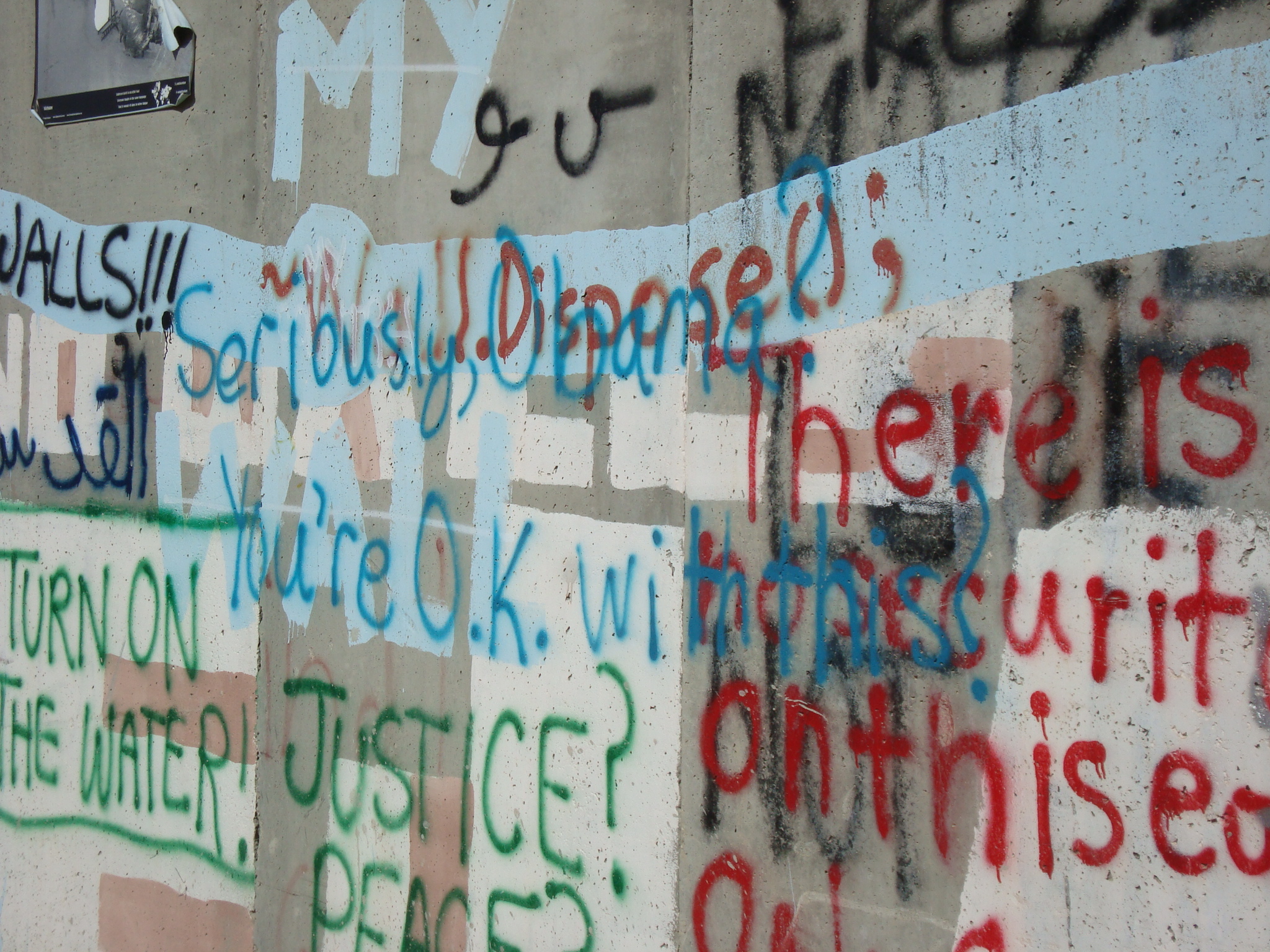
"Turn on the water!" - Separation Wall - Bethlehem - 13 Jan. 2011 - Photo: Sherry Ann

We all need water for physical reasons and spiritual reasons. This winter, at the height of evictions and demolitions of Palestinian homes by Israeli authorities in East Jerusalem, I was a tightly wound bundle of nerves. I had a very difficult time relaxing. But, I was the lucky one. On my three days off, I could ‘go to the water’, to Tel Aviv in Israel, to the Mediterranean Sea. I just went and sat on rocks by the water. I watched. I listened. I breathed. I took off my boots and I walked in the water.

Mediterranean Sea - Tel Aviv - Looking west toward Gaza - 30 Dec. 2010 - Photo: Sherry Ann

Not everyone who is a tightly wound bundle of nerves in Palestine can do that. For those who live in what has been called, the “largest open-air prison in the world”, Gaza, they may more easily ‘go to the water’. But that water is increasingly contaminated. (See EWASH factsheet #1 here).

We need to realize that the Israeli occupation of East Jerusalem, the West Bank, and Gaza is not only having a local impact. In terms of water, alone, this conflict is having international effects. Just think about how the water of the Mediterranean Sea is shared in that region of the world and flows into the Atlantic. Efforts to end the Israeli occupation of Palestine are particularly focused on the Mediterrean as I write given the efforts of the Freedom Flotilla II.  

Rev. Dr. Naim Ateek, the founder of Sabeel, the Ecumenical Liberation Theology Center in East Jerusalem, once said to an international conference in Washington, DC:

“Keep the energy; keep the fire burning. I hope some of you will get together and begin working on a strategy because many of us cannot listen anymore to analysis. We must move beyond that to effecting change. And I think we can do it.” (Click here.)

Reference:

Zaru, Jean. (2008). Occupied with Nonviolence: A Palestinian Woman Speaks. Foreword by Rosemary Radford Ruether. Minneapolis, MN: Fortress Press.

This posting, “Thirsting for Peace in Palestine and Israel – Water is a human right”, and the previous two postings on this blog are drawn from a spiritual gathering on 1 May 2011 at Southminster-Steinhauer United Church, Edmonton, Alberta, Canada. For an audio version of this series of postings, please click here.

Thirsting for Peace – Environmental Structural Violence – Water

This posting is the second in a series regarding the water and sanitation crisis in the Israeli government’s occupation of the Palestinian territories, particularly East Jerusalem and the West Bank. For more information about this crisis, click here.  

“Israeli troops kill Palestinian at West Bank checkpoint”

JERUSALEM | Sun Jan 2, 2011 1:24pm EST

JERUSALEM (Reuters) – “Israeli troops Sunday shot and killed a Palestinian who approached them at a West Bank checkpoint holding a glass bottle…” (for the full article, click here)

Morning view - Bethlehem - 12 Jan. 2011 - Photo: Sherry Ann

This is the kind of news headline that is familiar. This is “direct violence”. Yet, this news story from the 2 January 2011 has stuck with me because of the image of the young man carrying a bottle…what was in that bottle? Bottles are everywhere in East Jerusalem and the West Bank, particularly plastic bottles that have been thrown away. Recycling and garbage removal in East Jerusalem is a service only provided to some parts of that society. On the other hand, re-use in East Jerusalem and the West Bank is evident in containers of every size storing water… And here is the link to this image of the young man with the bottle…That bottle brings to mind another type of violence, “structural violence”.

Jean Zaru is the Presiding Clerk of the Friends Meeting House in Ramallah and a founding member of Sabeel, the Ecumenical Palestine Liberation Theology Center in Jerusalem. She writes that:

“Structural violence is silent. It does not show. Television captures the direct violence and most often the violence of the powerless and the hopeless, and it is headlined as terror. One basic weakness in most conceptualizations of violence in the Israeli-Palestinian conflict is the basic assumption of symmetry, which views contending parties in conflict as being equal.” But, as she observes, “the conflict is there because we are unequal. We are unequal in access to power, media, and influence. But we insist that we are not unequal in our rights.” (Zaru, 2008, p. 62)

Jean Zaru is calling out to the world, as are many other Palestinians and Israelis who are working toward ending the Israeli occupation of Palestine, with examples of this imbalance. One such example is the environmental structural violence around water.

Early in our orientation as the 25 Ecumenical Accompaniers of Group 38, we were introduced to George Rishmawi. He is Palestinian, the Advocacy Officer with the Near East Council of Churches, and a member of the EWASH – Emergency Water and Sanitation Hygiene – Advocacy Task Force (click here). EWASH has 31 international and local groups responding to the water and sanitation crisis in the occupied Palestinian territories. Rishmawi described to us that water is THE issue at the moment – it is a “tool of pressure” in the occupation, for as he said, being surrounded “by a wall, in a cage, without water, will kill a person”.

George Rishmawi - Jerusalem - 17 Dec. 2010 - Photo: Sherry Ann


In Palestine and Israel, there are four aquifers and they are being damaged:

“The coastal – down by Gaza. The northeastern, western and eastern are commonly referred to as the Mountain Aquifer. The main surface water resource is the Jordan river – starting in Lebanon – with rivers from Syria (Yarmouk) and Jordan (Zarqa) feeding into it. The Jordan River has been heavily abstracted upstream by Israel.”

4 Acquifers - EWASH - G.Rishmawi - 17 Dec. 2010

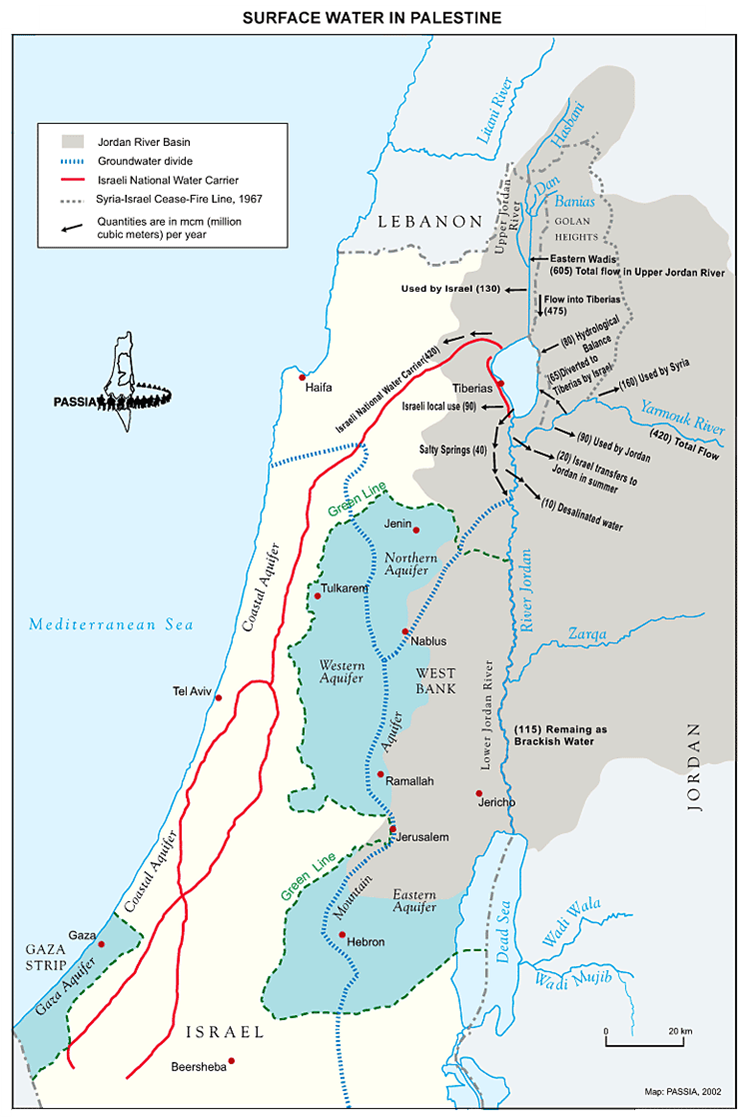
Rishmawi described to us that Lake Hula used to serve as a natural filter of these rivers into the Sea of Galilee (Tiberias Lake). But Lake Hula has shrunk considerably as a result of water-intensive agriculture and military (nuclear) purposes in Israel.

Surface Water - PASSIA - EWASH - GRishmawi - 17 Dec. 2010

On this next map, the red line outlines the National Water Carrier drawing water from the Jordan River into Israel. Before 1948, over one billion cubic metres of water flowed per year in the River Jordan. Post 1948, only 40 million cubic metres of water flow and it also carries sewage and discharge from fish farms. The Sea of Galilee is shrinking in size. The Dead Sea is also shrinking and, as a result, has split into a number of smaller lakes. In addition, surface evaporation is an issue for the Dead Sea: 25 mm/24 hrs (Shehadeh, 2008, p. 122).

According to George Rishmawi, in 1967 when Israel occupied East Jerusalem, the West Bank, and Gaza, “Israel secured control over all the ground water resources and issued military orders relating to water. For example: Military Order 98 (August 1967) transferred all authority over water resources to Israeli Military Command.” Permits were then required for developing water resources and infrastructure…including drilling wells and maintaining springs, cisterns, networks and reservoirs.

Further, “in 1982, then-Minister of Defence Ariel Sharon transferred all West Bank water supply systems to the Israeli national water company, Mekorot, for the symbolic price of one Israeli shekel.”

“As a result, Palestinians have been denied access to their rightful share of transboundary water resources and have been severely restricted in their ability to develop their water resources and water and sanitation infrastructure. The Wall, roadblocks, checkpoints and other Israeli ‘security measures’ further restrict Palestinian communities’ access to water resources and filling points.” (EWASH fact sheet #2, p. 1)

The Sea by Hikmat Hamdan (2010)

“I see a beautiful view when I wake up in the early morning. When the sun rises, from my roof I see the Dead sea, gleaming in the dawn. And when the sun rises opposite the settlement of Maale Adumim – an Israeli settlement – I see it like a crocodile.

And as I watch the sun rise, I say that maybe there will be a promise of a better tomorrow, and when I see the Wall, winding around us, I feel an acute pain, and I liken our life to a wrapped-around tin of sardines, and I think of the future of the young people. Will they find a tomorrow without tragedy and pain and siege, and will they be depressed?

And this is the tragedy of the Palestinian people. Although I live in a place with a stunning view, the Wall spoils its beauty.

Can you see how this is painful?

Can you see the pain that the Palestinian people live in?

What tomorrow will our children find?”

-Hikmat Hamdan

This posting, “Thirsting for Peace – Environmental Structural Violence – Water”, and the previous and the next postings on this blog are drawn from a spiritual gathering on 1 May 2011 at Southminster-Steinhauer United Church, Edmonton, Alberta, Canada. For an audio version of this series of postings, please click here.

References

Hamdan, Hikmat. (2010). “The Sea”. In Camden Abu Dis Friendship Association, Stories from our Mothers (meetings of British and Palestinian women). Edited by Nandita Dowson and Abdul Wahab Sabbah. Milton Keynes, UK: Lightning Source, p. 89.

Shehadeh, Raja. (2008). Palestinian Walks: Notes on a Vanishing Landscape. London: Profile Books.

Zaru, Jean. (2008). Occupied with Nonviolence: A Palestinian Woman Speaks. Foreword by Rosemary Radford Ruether. Minneapolis, MN: Fortress Press.

Thirsting for Peace in Palestine and Israel – Hospitality

This posting is the first in a series regarding the water and sanitation crisis in the Israeli government’s occupation of the Palestinian territories, particularly East Jerusalem and the West Bank. For more information about this crisis, click here.  

I’d heard of Arabic hospitality and the two women, in the EAPPI Jerusalem Team (#37) before us, described that we would be invited to tea.

Sandstorm - Al Ezariya - 8 Dec. 2010 - Photo: Sherry Ann

On this early December day, the wind was howling. On a blue bus, we passed through a checkpoint (in the Israeli separation barrier) leaving East Jerusalem, wound our way down many hundreds of metres into a valley on the way to the Dead Sea. But turned up again, climbing under the ridge of the Israeli settlement, Ma’ale Adumim, past the traffic circle, and into Al Ezariya or Bethany, the place people associate with Lazarus. My teammate and I, two of the newbies in Jerusalem Team 38, followed our Ecumenical-Accompanier (EA) mentors off the bus and then began the 20-minute trek to the Bedouin community on the edge of town. The sand was blowing so hard, I had no idea of the incredible view toward the Dead Sea until weeks later. I also had no idea of the incredibly bad black, acrid air that could hover over this place from the burning of the Jerusalem municipal garbage. All that we could see on that first afternoon was a tall traffic sign bent to the ground by the dry, cold wind.

Greater Jerusalem 2009 - Ir Amim: http://www.ir-amim.org.il/eng/?CategoryID=162

Our host greeted us outside in the cement, aluminum-roofed shelter where she, the EAs, and her young nieces and nephews had gathered weekly through the fall. We didn’t last long there with the wind. She invited us inside to the outer room of their home. We kept our winter layers on, as we would do inside and out for much of the winter.

And so began one part of our team duties that I grew to love in particular. Our host is about 26. She has two younger sisters, aged 20 and 16. They are three among many brothers living with their mother and extended family. In that Bedouin community, women stop socializing outside of the home in their teens. It is a conservative place. On a dry wind-swept hill. Our host described her family’s migration story over several generations. They are an internally displaced people due to the Israeli occupation of Palestine. Initially, they were forced out of their Bedouin, nomadic life from the Negev Desert. They moved to the area that became the massive, Israeli settlement of Ma’ale Adumim. Then, they were forced again to move and were unceremoniously dumped with their household stuffed into a long shipping container in the middle of winter on land loaned by the Palestinian community of Abu Dis. This Bedouin community has a 49-year lease and our host’s family has built a sturdy home, yet to be finished; in relative terms, they are lucky. Our host is unusual in that her father supported her interest in obtaining a university degree. The photos of the women and teen girls who are now dear to my heart show only their backs and hands. Taking photos of their faces is not permitted in this community.

Bedouin community - 27 Feb. 2011 - Photo: Sherry Ann


Weekly, we would arrive in time for tea with our host, her sisters, and little ones. Fresh sage would be put into our glasses. We accepted this hospitality – as quickly as we drank the tea, our glasses would be re-filled. When our host or her sister had finished their tea, four and five-year old nieces might pour a bit more into those same glasses and drink quickly. I never questioned why. After tea, our host would guide us to the top of the hill to the community caravan. Then we’d launch into a high-spirited hour of English conversation with a merry circle of 13-16 year old girls. Such an opportunity for them – given that they only see each other in school and on Wednesday afternoons in the caravan.

Sharing precious water - Bedouin community - 22 Dec. 2010 - Photo: Sherry Ann

One week in January 2011, after two of my EA teammates had visited, one of them described the following to me:

“What we learned later (a week or two after it happened) was that our host and her sister had no water, and so they had gone next door to their brother’s house and had borrowed water to serve us tea!  I believe that was the same day that I needed to use the bathroom and they apologetically said there was not much water, but they had a small amount (maybe a cup) in a little plastic watering can that I used to “flush”.” 

Such extraordinary hospitality…giving the last of their water to international guests…

The Israeli government has been controlling and restricting Palestinian access to water since 1967. In the West Bank, Palestinians may have the means to reach water in the ground but they are not allowed to do so. Yet, according to Article 43 of the Hague Convention, “Israel, as an occupying power over both the West Bank and the Gaza Strip, has the ultimate responsibility to as far as possible ensure that public order and safety are upheld in the territory it occupies, including securing the welfare of the population.” (Diakonia, 30 Apr. 2011) For human-rights reasons, an end to the Israeli occupation of Palestine is needed.

This posting, “Thirsting for Peace – Hospitality”, and the next few postings on this blog are drawn from a spiritual gathering on 1 May 2011 at Southminster-Steinhauer United Church, Edmonton, Alberta, Canada. For an audio version of this series of postings, please click here.

“Why I break the silence”

This is the voice of a former Israeli soldier, standing against the Israeli government’s occupation of Palestine. To hear his story, click here for a short, two-minute video.

All this week, the Israeli organization, “Breaking the Silence” will be releasing recent testimonies of Israeli soldiers talking about operations in the occupied Palestinian territories (i.e., East Jerusalem, the West Bank, and Gaza). In short videos, the former soldiers explain why they are choosing to break the silence.

Breaking the Silence has a Facebook page at: http://www.facebook.com/BreakingTheSilenceIsrael

“Only the very old and those who have space to live – live here [in Nabi Samuel].”

 
Nabi Samuel – 1 March 2011 – Photo: Sherry Ann
Mosque with synagogue – Nabi Samuel National Park – 1 March 2011 – Photo: Sherry Ann

Nabi Samuel. Nebi Samwil. Al Nabi Samuil. The Tomb of the Prophet Samuel. Many are the variations of the name for this place.

About 200 people also call this place: home. And many more do so from afar, because the buildings that survived the Israeli occupation of this hilltop in 1967 are no longer big enough for all of the Nabi Samuel, Palestinian community. In each of these buildings, three to four families may live together.

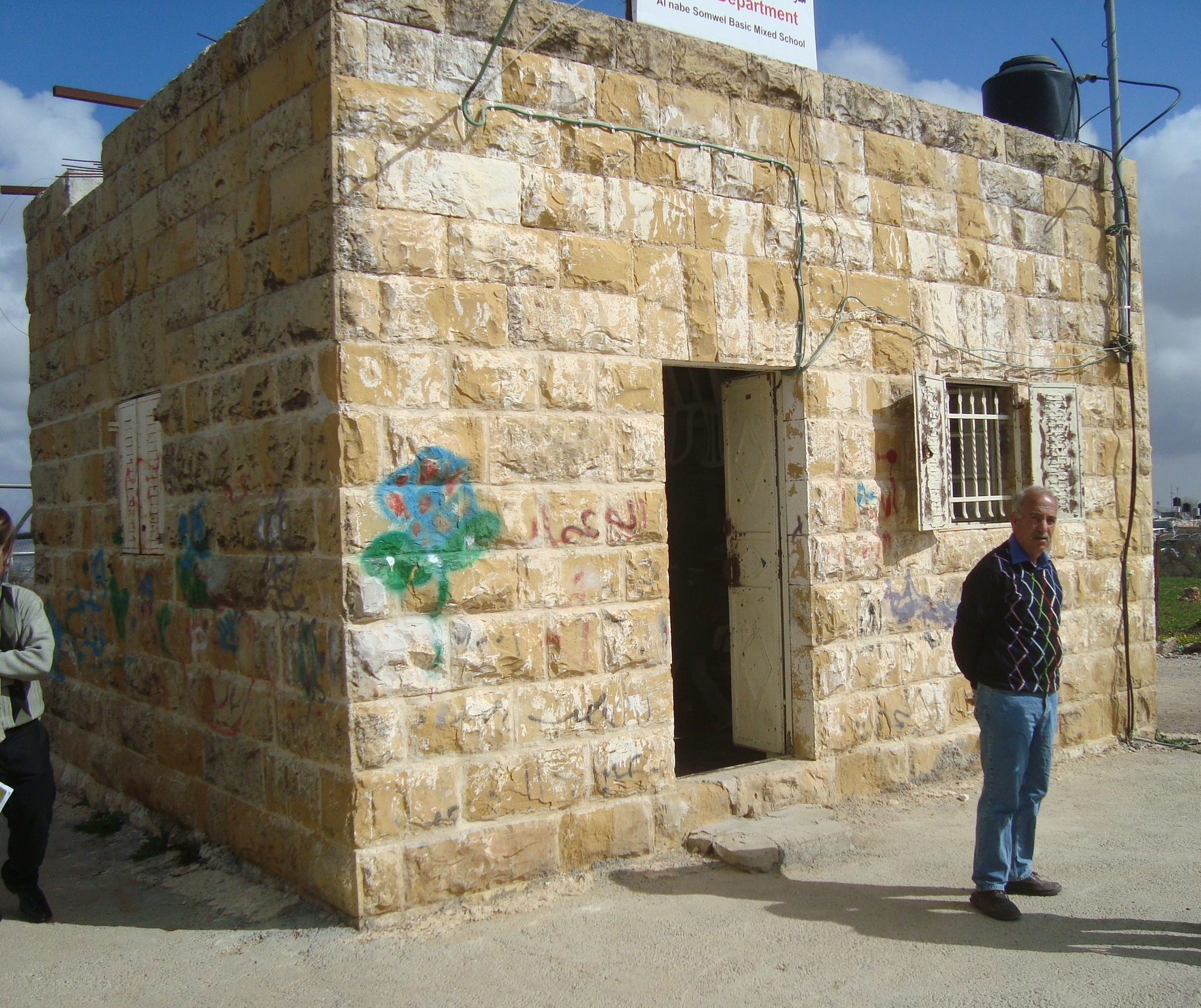
The principal and one teacher of the single-room school walked us, two Ecumenical Accompaniers, through the community on 1 March 2011. This is a key hilltop in history – dating to the Crusaders and Saladin in the 10th through 12th centuries (Common Era). This importance is due in part to the location with its clear view of Jerusalem to the south. In addition, this place is associated with the ancient burial place of the prophet Samuel. Revered by Judeo-Christian and Islamic traditions, a monastery, a mosque, and a synagogue had all been built here by the 16th century.

Rules - Nabi Samuel National Park - 1 March 2011 - Photo: Sherry Ann

In the Israeli occupation of the West Bank, Nabi Samuel is a place of tension and destruction. In 1971, the village buildings surrounding the mosque were demolished. Palestinian residents fled to the eastern part of the small plateau and a dozen buildings there, and beyond, as far as Jordan. Since then, part of the mosque has been turned into a synagogue. The building stands like an island surrounded by an archaeological excavation site and a fence. A sign with rules outlines acceptable behaviour of all visitors, including the people of Nabi Samuel.

As we learned in early March 2011, only older adults and some families who have living space remain in Nabi Samuel. The village is located in Area C in the West Bank, according to the Oslo Agreement of the 1990s (click here). This means that the Israeli government has planning, building, and military control and has not permitted any new construction. The community does not have any health clinic or facilities. The school is only a few square metres. The village council has applied to build an additional schoolroom but has been denied that permit. A small, lean-to like bathroom was built on an outer wall of the school; it was demolished by the Israeli authorities. Currently, a re-constructed bathroom exists but remains unfinished – a result of living in the limbo of Area C. A skeleton of a frame for a shelter, for the children to use when playing outside at recess, waits for an Israeli permit. Desks and chairs for more than 10 pupils is optimistic in the existing school building. Other Nabi Samuel children travel to different schools with their parents on their way to work into the West Bank.

School - Nabi Samuel - 1 March 2011 - Photo: Sherry Ann

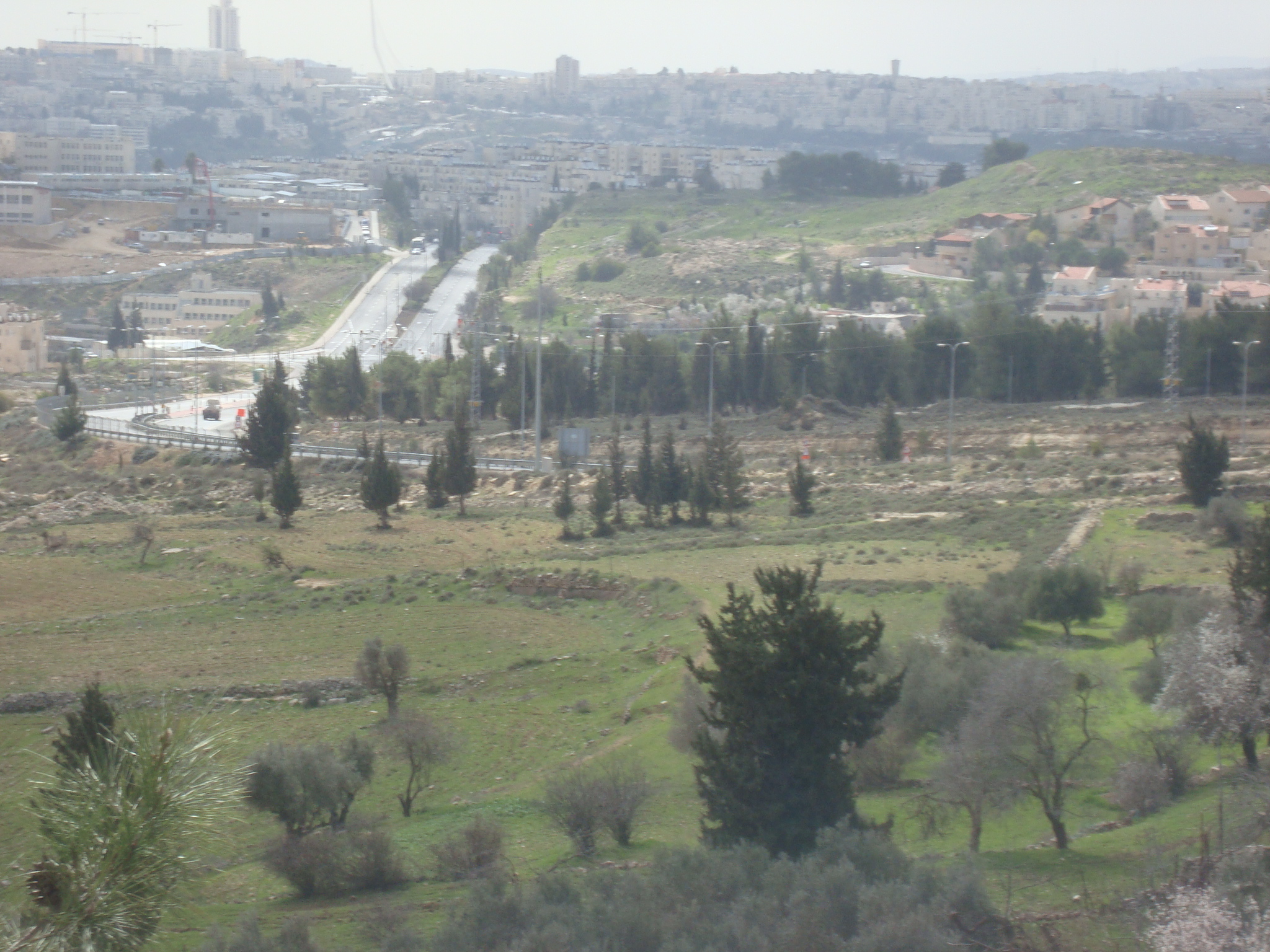
The people of Nabi Samuel can see East and West Jerusalem from their hilltop. Yet, they cannot use the newly built road that skirts the hilltop. They have access to only one road and it leads to an Israeli checkpoint (Al Jib) in a part of the Separation Barrier that is in the West Bank. (The 85% of the Separation Barrier/Wall built inside the West Bank is illegal according to international law.) Israeli settlers alone can speed along the new asphalt from West Jerusalem to West-Bank settlements north of Nabi Samuel. (Settlements are illegal because they are located in the West Bank. This is population transfer and a war crime according to Article 49(6) of the Fourth Geneva Convention. Click here). These settlements are considered to be part of Greater Jerusalem; so, while Nabi Samuel is located within the annexed Jerusalem municipality, it is zoned as the West Bank.

West Jerusalem and settler road as seen from Nabi Samuel - 1 March 2011 - Photo: Sherry Ann

The Israeli Separation Barrier has been built such that Nabi Samuel, a West-Bank community is located on the Jerusalem side of the Barrier. As a result, the Palestinian Authority cannot access the community to offer health and social services. Already it has divided two Bedouin families who also live on the eastern end of the plateau. In effect, they, all, are already “trapped”; they cannot obtain permits to work in Jerusalem. Each person is numbered at the Israeli checkpoint and has a West-Bank identification (ID) card. Without an Israeli number on an ID card, a Palestinian is denied access to the village; this impacts extended family members of Nabi Samuel residents. All movement of goods brought into the village must be coordinated with Israeli authorities in advance. Only three Nabi Samuel cars are registered at the checkpoint. This means that in a health emergency, which is occurring more frequently as the population ages, only a few options exist:

1)      A resident with one of the three cars can drive the ill person to the checkpoint.

2)      A phone call can be made for a Palestinian ambulance with a West-Bank licence. At minimum, the ill person will wait for three to five hours…if they are fortunate enough that an ambulance actually arrives.

Red Poppy - Nabi Samuel - 1 March 2011 - Photo: Sherry Ann

How then does this community live each day?  Actually, 16 Palestinian communities are trapped in this way due to Israeli government policy and practice.

On the warm spring day of our walk-about, we were greeted by the first wave of red poppies that arise with spring. At first glance, the red on the brown-green hillsides seems unreal…but close-up, these are living witnesses of the injustices of the Israeli occupation of Palestine. Each year, they appear… Despite the ugliness of the occupation, they are beautiful…a beautiful persistence… Reminders to continue advocacy for a just peace in this poignant place…

For more information:

Click here for a recent article.

Additional info here and here .

Alternative Tourism Group. (2008). Palestine & Palestinians Guidebook. 2nd Ed. Beit Sahour, Palestine. See: www.atg.ps

“We have no home.” Please note for the 2011 Canadian federal election.

21 Dec. 2010, 12:01 pm – “Demolition ongoing of a Palestinian (inhabited) home in Ras al Ahmud in East Jerusalem.”

Ras Al Amud, East Jerusalem - Outside the demolition - 21 Dec. 2010 - Photo credit: Sherry Ann

How does this connect to Canadians?

I witnessed the effects of this demolition. Please read the following account. Then, click here for questions to ask the candidates in your riding leading up to our federal election on 2 May 2011. The questions appear on p. 20 of the 2011 non-partisan Federal Election Kit produced by the United Church of Canada.

~~~~~

On 21 Dec. 2010, the second day of our term as Jerusalem Team 38, we received news of a home demolition. We arrived in the neighbourhood at 12:30 pm, having been stuck in traffic.

Israeli armed personnel leaving the demolition – East Jerusalem – 21 Dec. 2010 – Photo credit: Sherry Ann

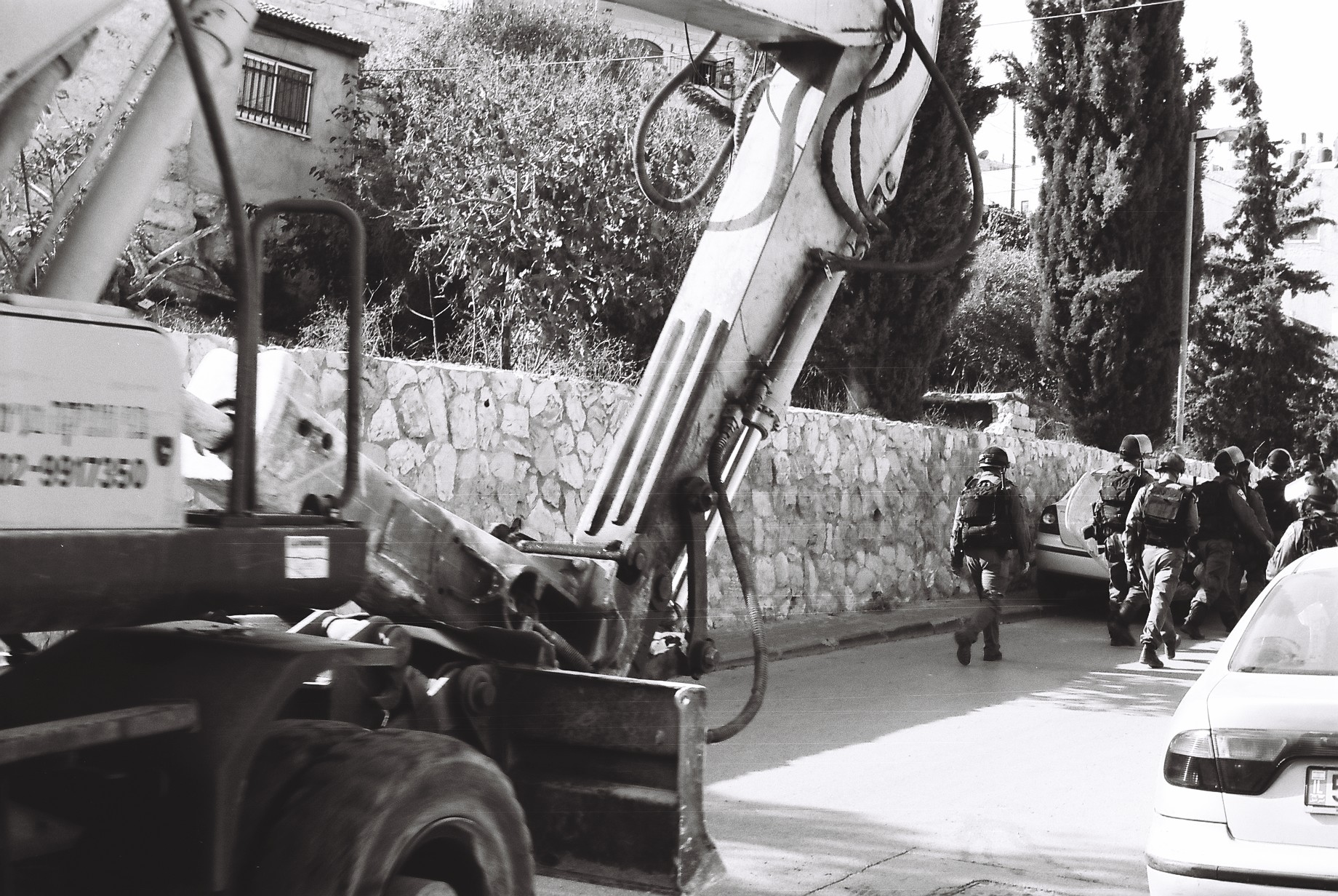
As we approached the property where the demolition had occurred, we passed armed personnel with riot gear on the street and a heavy construction digger. Young local men told us we had missed the demolition. What could we say…

Heavy digger leaving demolition - East Jerusalem - 21 Dec. 2010 - Photo credit: G. Hess

We rounded the corner of the perimeter wall of the property and witnessed this.

Demolition - Ras Al Amud home, East Jerusalem - 21 Dec. 2010 - Photo credit: Sherry Ann


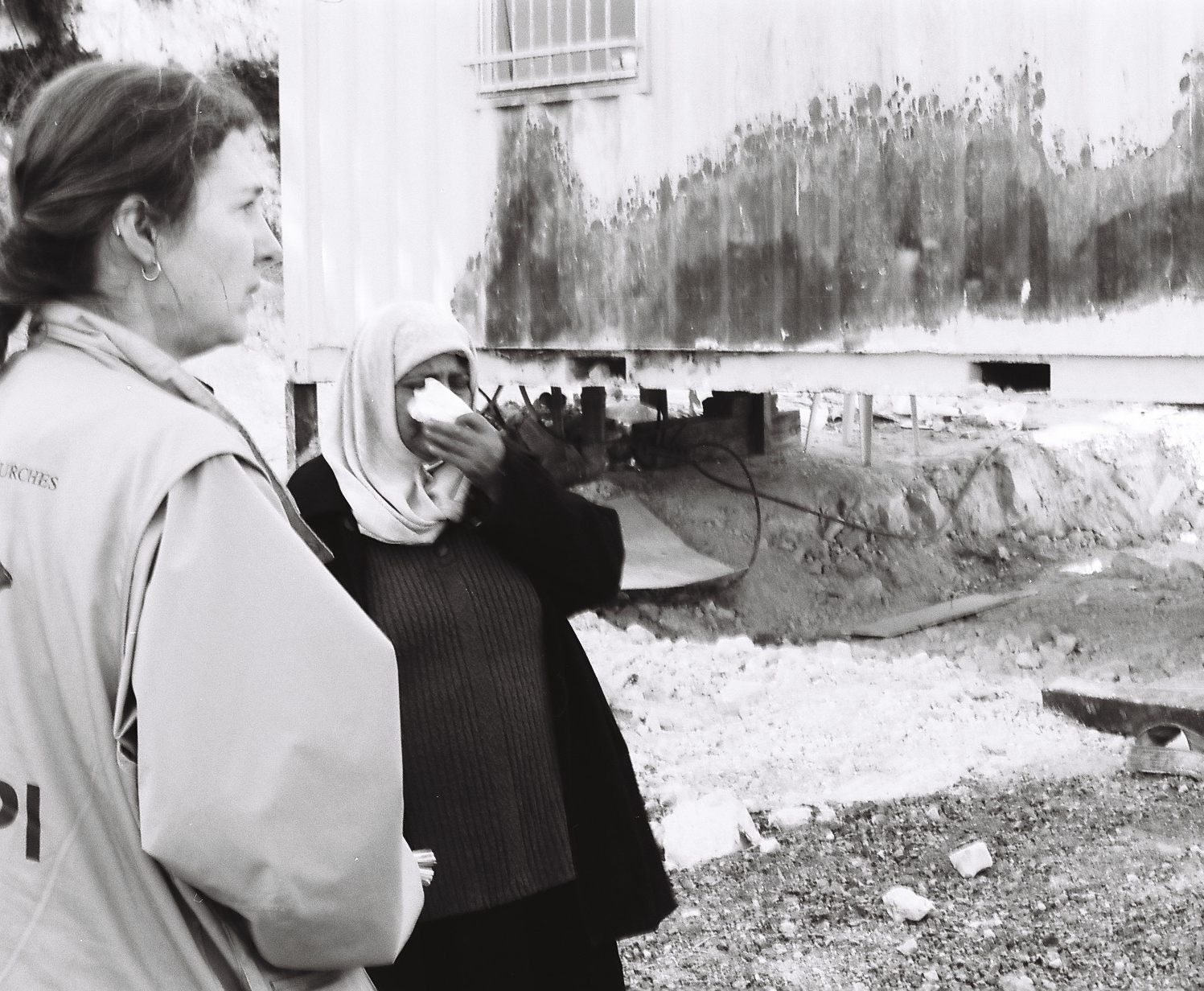
The family, whose property this is, had lived there for 6 years. The home was built in two, joined containers (like shipping containers) and sat on stilts. When we arrived, the family was tearing apart the inside of the house.

Home demolition - Ras Al Amud, East Jerusalem - 21 Dec. 2010 - Photo credit: Sherry Ann

Soon after, a woman in a car, with the blue letters of the United Nations, arrived and spoke with the family. Thirteen people had lived in the house: the father and mother and their seven children, including two of their grown sons’ families.

To my shock, we came to understand that it was a forced self-demolition (i.e., under the eyes of the Israeli armed personnel and the Hyundai heavy construction digger). The family had received a written warning 48 hours prior to 21 Dec. 2010. The family had started the self-demolition on 20 Dec. 2010 so that they wouldn’t be charged an additional demolition fee by the Israeli authorities.

"We have no home." - Ras Al Amud, East Jerusalem - 21 Dec. 2010 - Photo credit: Sherry Ann

They were told that if they didn’t move the house by the end of 21 Dec. 2010, the Israeli authorities were planning to return on 22 Dec. 2010 to flatten the entire structure. The family had already paid 20,000 NIS (nearly $6,000 CDN) to the Israeli government. If they didn’t move the house, the full demolition would occur and they’d be fined another 100,000 NIS (almost $30,000 CDN). Further, family members would be imprisoned. They planned to move the container by that same night.

~~~~~

How does this happen?

Some background: Israel occupied East Jerusalem along with the West Bank in 1967. Occupation is regarded internationally as a temporary situation. Permanent changes in occupied territory are not allowed except for military necessity or to benefit the local population (Article 43, Hague Regulations). Destruction of property is not allowed (Article 53, Fourth Geneva Convention). Confiscation of property (Article 46, Hague Regulations) is not allowed. The forced displacement and inhumane treatment (e.g., denying essentials like water) of the local population is…not allowed.

However, Israel began its self-declared, illegal annexation in 1967. Using force, it expanded the municipal boundaries of East Jerusalem by annexing 28% of West Bank. The Israeli government has been moving its citizens into occupied East Jerusalem. This is population transfer and is a war crime [Article 49(6), Fourth Geneva Convention]. The Israeli government’s construction of the Separation Barrier (Wall) to the east of the internationally recognized Green Line (i.e., the 1949 Armistice line following the declaration of the state of Israel) is also illegal (International Court of Justice, 2004; click here, p. 3). Finally, house and infrastructure demolitions  are a war crime because they are a grave breach of the Geneva Conventions (click here and here).

 And yet, the Israeli authorities declare that homes built without building permits in East Jerusalem are “illegal” structures. Through this declaration, they issue demolition orders.

In Jerusalem municipal planning, only 13% of East Jerusalem is zoned for Palestinian construction. Most of that area is already built-up. Obtaining building permits for Palestinian construction is practically impossible.  To obtain a permit to build or expand a home, a Palestinian may be required to open a land registration file (proving ownership). This may be complicated by refugee status, absentee ownership, and/or partial ownership by the Israeli government. A detailed plan is required demonstrating that the construction will connect with existing public infrastructure (i.e., roads, water). This may be difficult to demonstrate when the Jerusalem municipality has failed to provide that infrastructure. The density allowed is half of what is permitted in Israeli settlements (in East Jerusalem and thus illegal) and in West Jerusalem.

 Finally, the cost of a permit may be prohibitive. A basic fee (e.g., $25,700 CDN for a small 200 m2 building on a 500 m2 plot) is charged in the application process. And then an additional fee (relative to the size of the proposed construction and the income level of the neighbourhood) will be charged. Together, these fees may be as high as the cost of construction. The process for applying for a permit may also take several years. Many more permits are needed than are granted to Palestinians in occupied East Jerusalem.

~~~~~

When asked where they would move the house: “To the street”, one of the older sons said and shrugged. They planned to live in a tent on the property. They felt that if the Israeli authorities were to revisit the property, they could move a tent away quickly. They felt they had nowhere else to go.

In the final conversation that we had with the father, he said, “We have no home.” He told us that he really appreciated EAPPI being there with them: “Pray for us. Thanks for coming. Maybe because you come here and are in solidarity [things will be better].” “I will be alone but I know others will be here [i.e., because you will tell the world].”

As we were leaving, a younger son, about 12 years old, arrived from school. He looked stunned and was hanging close to his mother though not able to be with her because she was being interviewed by a journalist.  

What happens to families after a demolition? According to a March 2011 report, life may be very unstable for a significant proportion of families for up to two years after a demolition:

“In addition to economic losses resulting from fines, legal fees and the lost investment in homes, the contents of the house are often destroyed during demolitions. Families often continue to pay instalments on fines long after the structure is demolished. An additional economic burden following the demolition is the payment of rent, which places considerable stress on already limited financial resources. Combined with psychological distress and debt, displaced families have few alternatives to relocate, since the land they build on is generally the main family asset.” (UNOCHA, March 2011, pp. 38-39)

Home? - Ras Al Amud, East Jerusalem - 21 Dec. 2010 - Photo credit: Sherry Ann

“Given their vulnerability, children, who represent over 50 percent of the Palestinian population, are frequently disproportionately impacted by displacement. According to the survey, in the immediate aftermath of a demolition children face interrupted education, a reduced standard of living and limited access to basic services, such as water and health. The survey also found that emotional and behavioural problems persist even after the six month period following the demolition”. (UNOCHA, March 2011, p. 39)

Relocation may mean having to look for available, affordable housing…outside of East Jerusalem…in the West Bank. This in turn may result in the loss of permanent residency in East Jerusalem… and the loss of home on a collective, Palestinian level…

What can we do as Canadians? “In voting against resolutions of the United Nations Human Rights Council condemning Israel’s violations of Palestinian human rights, Canada has also failed to live up to its obligations to uphold respect for international human rights and humanitarian law.” (Federal Election Kit, 2011, The United Church of Canada, p. 20)
What to do? Ras Al Amud, East Jerusalem - 21 Dec. 2010 - Photo credit: G. Hess

We can vote on 2 May 2011.Leading up to the election, we can ask our local candidates these questions:

“Will you and your party continue to support United Nations resolutions on the Israeli-Palestinian conflict, which are based on established International Humanitarian Law, in order to secure a just resolution to the conflict?

• Will you and your party live up to Canada’s obligations to uphold International Humanitarian Law by condemning acts of violence against civilians by both sides?

• Will you and your party play a constructive role in promoting a negotiated and just peace agreement between Israel and Palestine by bringing all parties concerned to the table?” (Federal Election Kit, 2011, The United Church of Canada, p. 20)

Read more here:

http://www.ochaopt.org/documents/house_demolition_23_12_2010_press_release_english.pdf

http://www.ochaopt.org/documents/ocha_opt_jerusalem_report_2011_03_23_full_english.pdf

http://unispal.un.org/UNISPAL.NSF/0/7EA0B394A427A1428525784900543953

http://www.united-church.ca/files/getinvolved/takeaction/2011-election-kit.pdf

Bomb in Jerusalem

In a small bag.

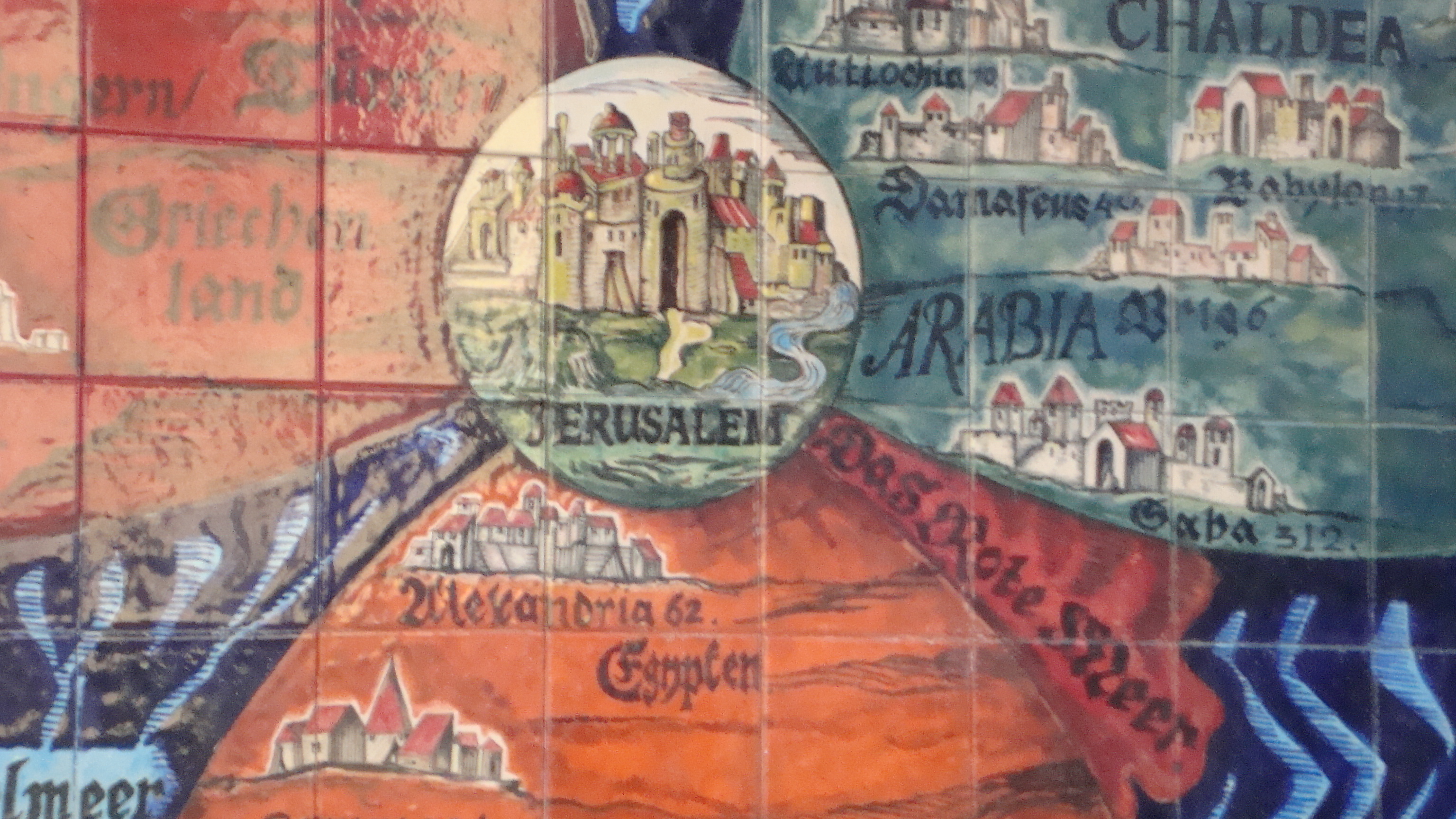
Jerusalem Map Detail - Jerusalem Municiple buildings - 27 Dec. 2010 - Photo: Sherry Ann

Near the Central Bus Station with people coming and going. And standing.

She was hurt and died.

She Who is my mother.

Your mother.

“So countless are all sentient beings, and so many their births throughout time, that each at some point was your mother.”*

Poor One who left the small bag…

Such pain packed there…

West Jerusalem skyline - 1 March 2011 - Photo: Sherry Ann

-Sherry Ann (26 March 2011)**

*Joanna Macy quoting a Tibetan nun.    Joanna Macy with Norbert Gahbler. (2010). Pass It On: Five Stories That Can Change the World. Berkeley, CA: Parallax Press, p. 53.

**A bomb exploded from a small bag that was left near the Central Bus Station, West Jerusalem, on 23 March 2011. Click here, here, and here for more information.

Freedom of Movement.
Can I go?

I’m looking forward to home

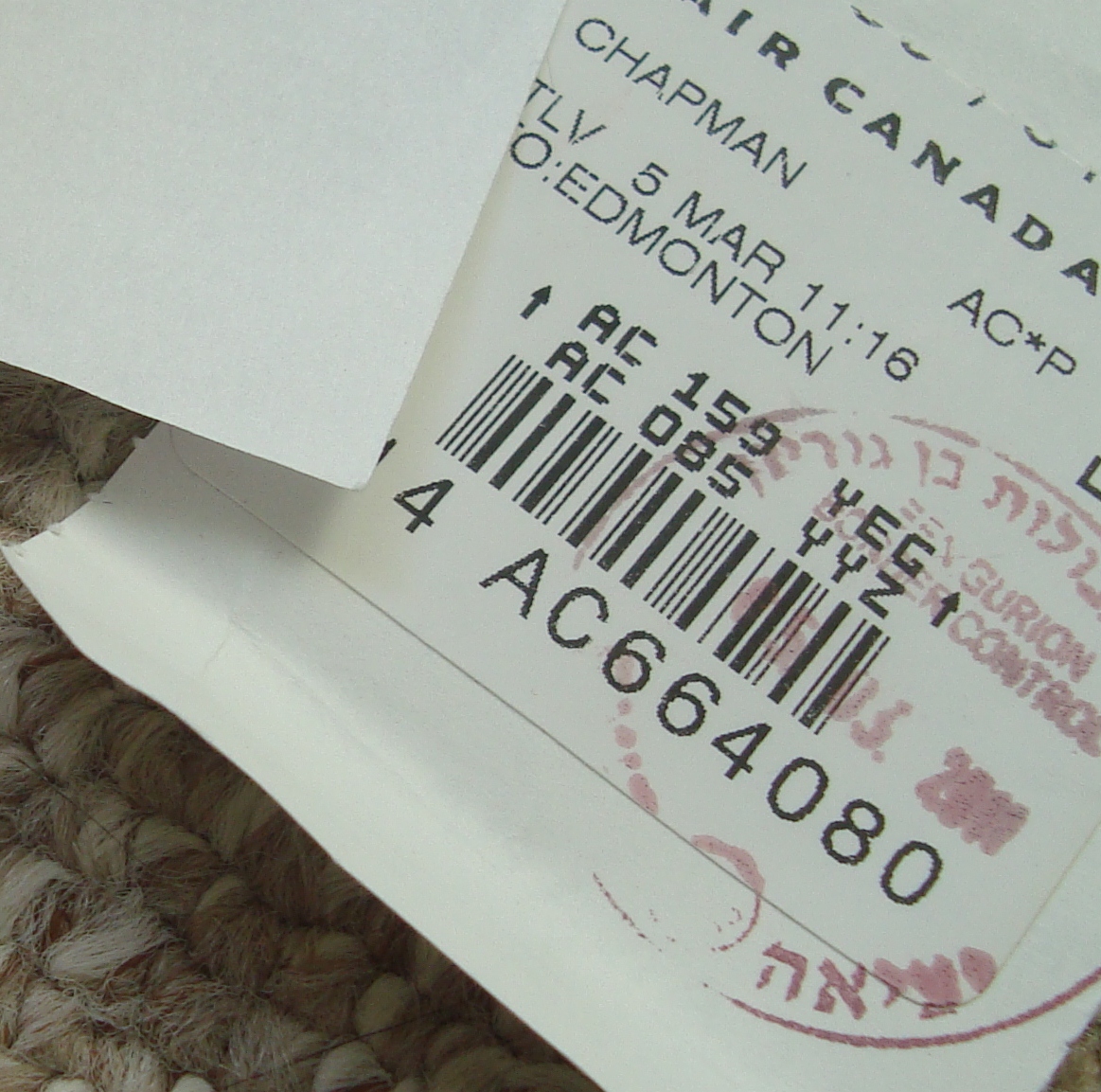
Ready to go - 5 Mar. 2011 - Photo: Sherry Ann

Please wait.

Why did you come here?

When?

How?

Why?

Why?

Who sent you…

Can I go now…?

Not you.

Go!! Get out of here. Move away…

Please wait.

Who brought you here?

How could you afford to come here?

Why did you come…

We know. But WHY?

Go. - 5 Mar. 2011 - Photo: Sherry Ann

Can I go?

Go. Don’t ever come back.

Come back and see…

The freedom of this democracy.

Why did you come THAT way?

Can they go, please?

There…?

Where?

No. Not them. There.

You can go.

But, please wait here.

6.

Did you pack this?

What is this?

Here. Take your things.

But wait. Please.

Put this in that. Then, come here.

Go back.

Can they come, please?

Wait…

Who is it that you say that you are?

No. Not your name.

Where is your number?

Ah, but are you that person?

She is Palestinian.

Have you asked her name, perhaps?

Leave. Now.

No. Wait.

Orange stickers everywhere.

Bright orange - 5 Mar. 2011 - Photo: Sherry Ann

“You’re late.”

No. You cannot take that. Her. She stays.

There. Behind that line.

No moving allowed.

Actually. Move out.

Yes. Go. Away.

“May you go in peace and return in peace!”*

“Walk straight ahead to passport control.” – 5 Mar. 2011 – Photo: Sherry Ann

-Shock-

Who did they think I was?

What did they see?

Not me.

Who am I then?

No vest. Two backpacks, and a small booklet of pretty stamps. Canadian.

A small shell as keepsake.

A plastic star.

A marble of affirmation.

And coins clattering down to the corner of the grey tray. After the body search. Help me? She found my earring backing in the dust of the carpet.

What are your names? The 8 or more of you who tried to strip me bare?

You never asked mine.

I was, “Miss”.

And not Palestinian.

A ‘3’ last time. A ‘6’ this time. 6 is the highest security risk.

Palestinians: ‘6’ every time.

6. Every time. - 5 Mar. 2011 - Photo: Sherry Ann

Read more here about this reality of the occupation.

*Actual greeting at the Zaytoun Checkpoint into East Jerusalem.